



Security and visibility are important in retail stores, warehouses, parking areas, offices, warehouses, and other commercial spaces. Blind spots can make it difficult for employees and security teams to monitor certain areas effectively. The right mirror solution can improve visibility, reduce hidden areas, and support a more secure environment.
Two commonly used options are Domes And Mirrors and Convex Mirrors. Although both are designed to expand visibility, their shapes, viewing angles, installation methods, and applications can differ. Understanding these differences can help businesses choose the right solution for their specific space.
What Are Domes and Mirrors?
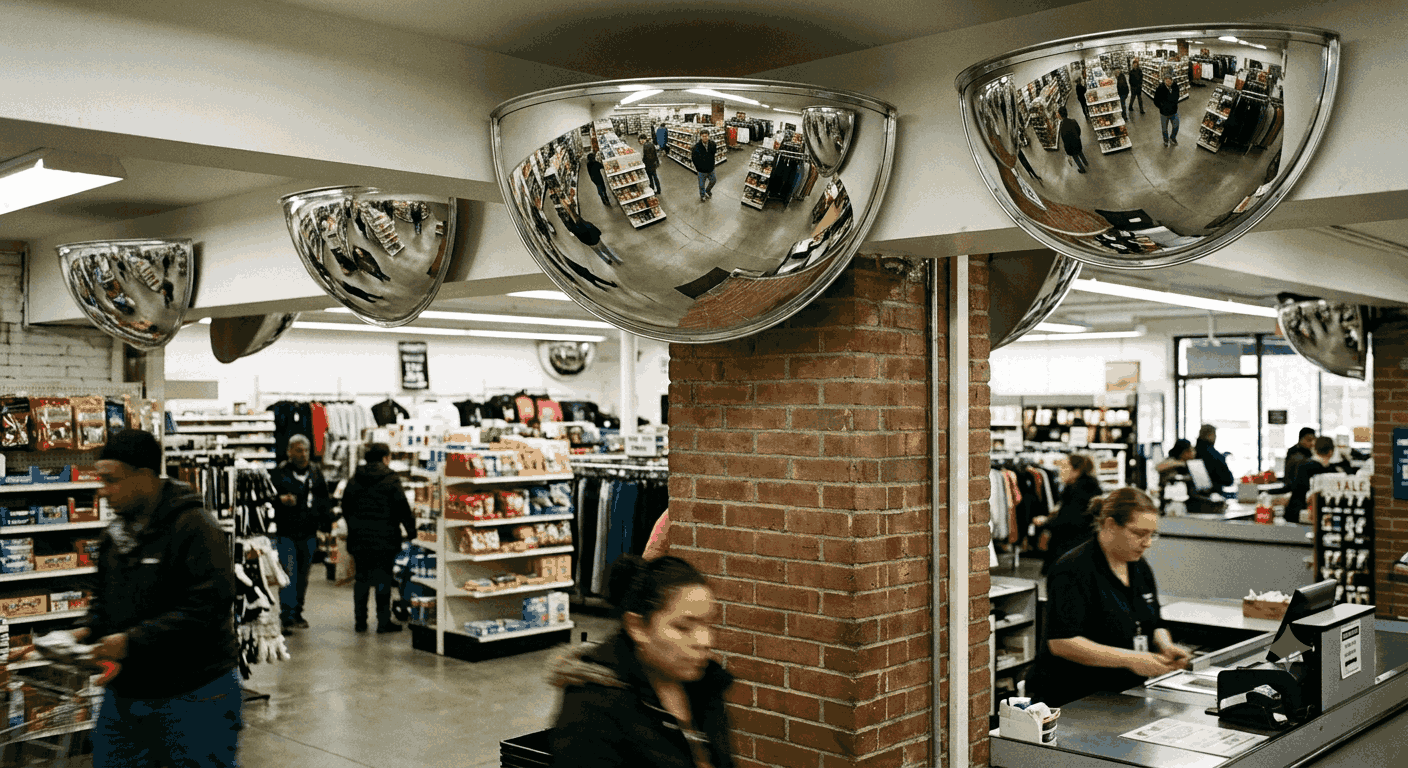
Domes And Mirrors are security and visibility solutions designed to provide a broader view of areas that may otherwise be difficult to monitor. Dome-style mirrors typically have a curved reflective surface that allows people to see around corners, intersections, aisles, or other obstructed areas.
These mirrors are particularly useful where traditional flat mirrors cannot provide sufficient coverage. Their curved design can help employees identify movement in areas that are outside their normal line of sight.
Depending on the application, dome mirrors may be installed on walls, ceilings, or at strategic points within a facility. Retail businesses can use them near aisles, entrances, exits, checkout areas, and other locations where visibility is important.
What Are Convex Mirrors?
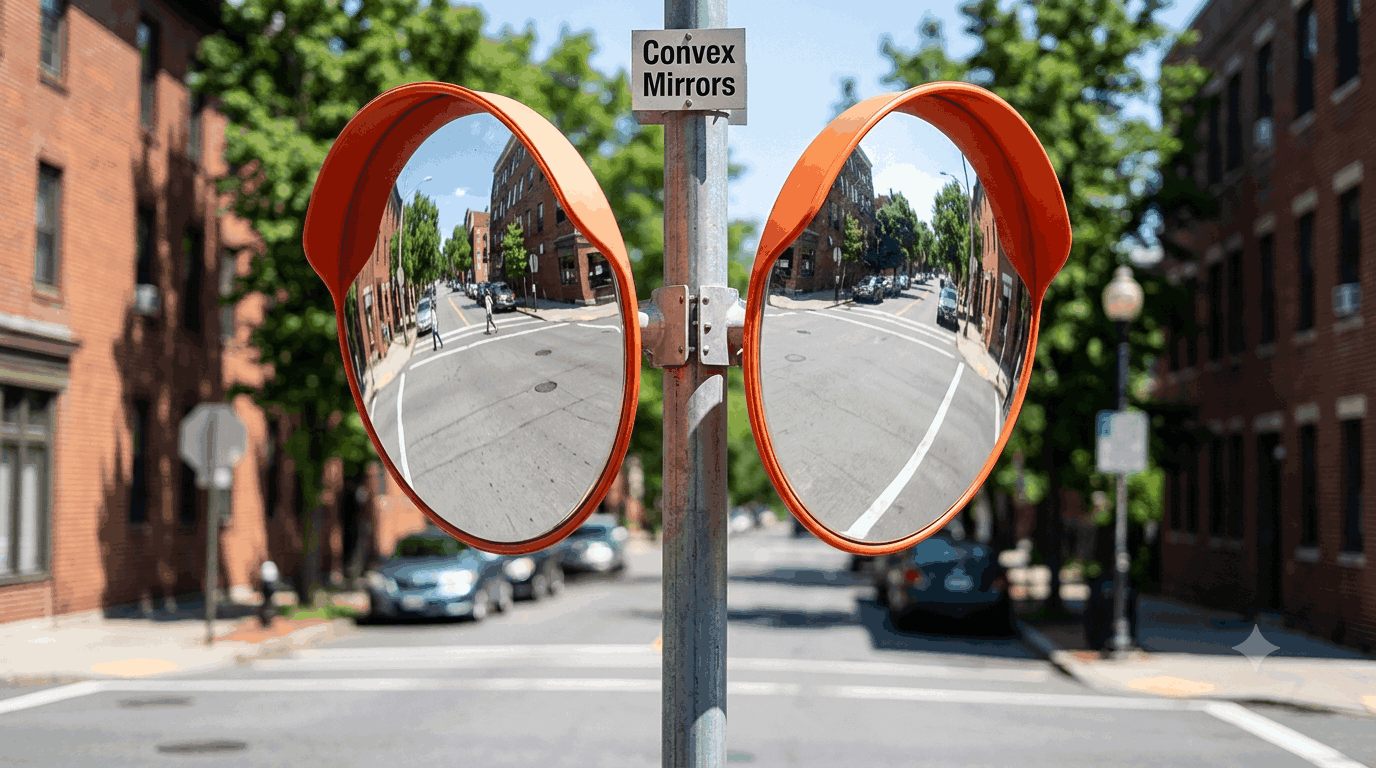
Convex Mirrors have an outward-curved reflective surface. This design allows them to provide a wider viewing area than a standard flat mirror. Instead of showing a narrow section directly in front of the mirror, a convex surface can cover a much broader field of view.
These mirrors are commonly used in retail stores, warehouses, parking garages, driveways, factories, corridors, and intersections. They can help people see approaching customers, vehicles, employees, or other activity from different directions.
One important characteristic of a convex mirror is that reflected objects may appear smaller or farther away than they actually are. Therefore, these mirrors are best used as a visibility aid rather than as a replacement for direct observation or electronic security systems.
Domes and Mirrors vs. Convex Mirrors: What’s the Difference?
At first glance, these two mirror solutions may appear similar because both use curved surfaces to improve visibility. However, the right choice depends on the location and purpose.
Domes And Mirrors are often selected when businesses need coverage across a particular area, especially around corners or within indoor spaces. Their shape and installation position can make them useful for monitoring aisles, intersections, and concealed sections.
Convex Mirrors, on the other hand, are versatile options for situations where a wide viewing angle is required. Their applications extend from retail environments to traffic areas, parking facilities, warehouses, and industrial locations.
The area’s size, viewing distance, mounting location, lighting, and the kind of activity that has to be watched are the key elements to take into account.
Benefits of Using Security Mirrors
1. Wider Visibility
Curved mirrors can provide a broader field of view than flat mirrors. This can help employees monitor multiple directions without physically moving around the area.
2. Reduced Blind Spots
Blind spots can create security challenges in stores and commercial facilities. Properly positioned mirrors can help improve visibility around corners, shelving units, entrances, and other obstructed locations.
3. Cost-Effective Security Support
Mirrors are generally a simple and affordable addition to a broader security strategy. They do not require complicated software, wiring, or continuous power.
4. Easy Installation
Many security mirrors can be mounted on walls, ceilings, poles, or other suitable surfaces. Installation requirements vary depending on the mirror design and location.
5. Improved Employee Awareness
Employees can use strategically positioned mirrors to maintain awareness of customers and activity in areas that are not directly visible from their normal position.
Where Should You Use These Mirrors?
The best location depends on the layout and security requirements of your facility.
Retail stores:
Mirrors can be positioned near aisles, corners, entrances, exits, and checkout areas to improve visibility and help staff observe customer movement.
Warehouses:
Large facilities often contain shelving and storage racks that create blind spots. Properly positioned mirrors can improve visibility at aisle intersections.
Parking areas:
Mirrors can help drivers and pedestrians see approaching vehicles around corners, ramps, and narrow exits.
Offices and commercial buildings:
They can improve visibility around corridors, stairways, and building intersections.
Factories and industrial facilities:
Mirrors may assist with visibility near machinery areas, vehicle routes, loading zones, and warehouse entrances.
How to Choose the Right Mirror
Before purchasing a security mirror, evaluate the environment carefully.
Consider the viewing area
Determine how much space needs to be visible. A larger area may require a larger mirror or multiple mirrors.
Check the mounting position
The mirror should be installed at an appropriate height and angle. A poorly positioned mirror may provide limited visibility even if the mirror itself is high quality.
Consider indoor or outdoor use
Outdoor applications require products designed to handle weather conditions, temperature changes, and moisture.
Evaluate lighting
Poor lighting can reduce the usefulness of any mirror. Make sure the installation location provides sufficient illumination.
Look at the viewing distance
Objects reflected in curved mirrors may appear smaller. Consider how far away employees or drivers will be from the mirror when selecting its size and placement.
Can Security Mirrors Replace CCTV?
No. Mirrors and CCTV cameras serve different purposes and are most effective when used together.
A mirror provides an immediate visual reflection that can help people observe areas around corners or behind obstructions. CCTV systems, meanwhile, can record activity and allow security personnel to monitor multiple locations remotely.
For retail businesses, combining strategically positioned mirrors with cameras, electronic article surveillance, security tags, proper lighting, and trained employees can create a more comprehensive security approach.
Practical Installation Tips
Start by identifying the facility’s most important blind spots. Walk through the area from an employee’s or customer’s perspective and identify locations where visibility becomes limited.
Install the mirror where it can provide the maximum useful viewing area without creating unnecessary visual distractions. After installation, check the reflected image from the position where employees or drivers will normally stand.
Regularly clean the reflective surface because dust, fingerprints, and dirt can reduce visibility. Outdoor mirrors should also be inspected periodically for weather-related damage.
Final Thoughts
Choosing between Domes And Mirrors and Convex Mirrors depends primarily on the environment, viewing requirements, installation location, and desired coverage. When chosen and positioned properly, both solutions can assist decrease blind spots and increase visibility.
Convex Mirrors are particularly useful when a wide viewing angle is required across retail, warehouse, parking, and industrial environments. Dome-style solutions can be valuable for indoor areas where visibility around corners and concealed sections is a priority.
Consider security mirrors as a component of a larger security plan for optimal outcomes. Combining them with CCTV, appropriate lighting, employee awareness, access controls, and other loss-prevention measures can provide stronger overall protection.
Frequently Asked Questions
1. Are convex mirrors suitable for retail stores?
Yes. Convex mirrors can be useful in retail stores for improving visibility around aisles, corners, entrances, exits, and other areas where shelving or displays create blind spots.
2. What is the main benefit of dome-style security mirrors?
Their curved design can provide expanded visibility in areas where direct lines of sight are restricted. They are particularly useful around corners and indoor intersections.
3. Can security mirrors be used outdoors?
Yes, but outdoor installations should use mirrors designed for exterior conditions. Weather resistance, mounting stability, visibility, and proper positioning should all be considered.
4. Should security mirrors be used with CCTV?
Yes. Mirrors and CCTV complement each other. Mirrors improve immediate visual awareness, while CCTV can provide remote monitoring and recording capabilities.
Strengthen Your Store’s Visibility and Security
Don’t let blind spots create unnecessary security challenges. Evaluate your facility’s layout and identify areas where improved visibility could make a difference. Choose the right mirror solution and combine it with other appropriate security measures for a more effective loss-prevention strategy.