


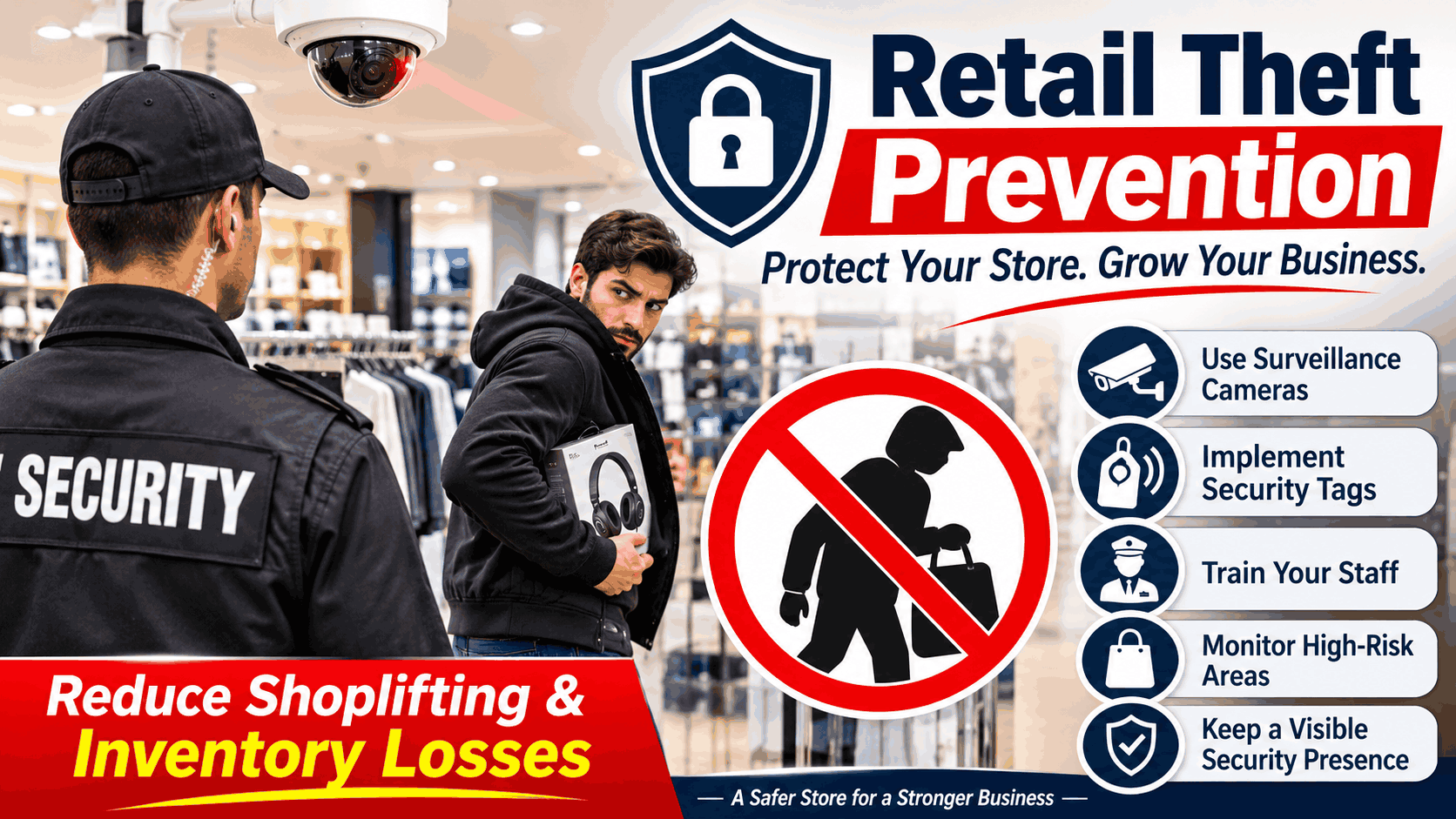
Retail theft is one of the biggest challenges facing modern retail businesses. From small convenience stores to large shopping chains, retailers regularly deal with shoplifting, employee theft, organized retail crime, and inventory shrinkage. These issues can lead to financial losses, operational difficulties, and reduced business profitability. Implementing effective Retail Theft Prevention Strategies is essential for protecting merchandise, improving store security, and maintaining a safe shopping environment.
Retailers need more than traditional security measures to prevent theft. A combination of advanced security technology, employee awareness, proper store management, and effective merchandise protection can significantly reduce inventory losses. By adopting the right Retail Theft Prevention Strategies, businesses can identify potential risks, discourage theft, and protect valuable products.
Understanding the Causes of Retail Theft and Inventory Losses
Before implementing security measures, retailers should understand the common reasons behind inventory shrinkage. Retail losses do not always result from shoplifting. Several internal and external factors can contribute to missing merchandise.
Common causes include:
Shoplifting: Customers intentionally remove merchandise from stores without paying.
Employee Theft: Unauthorized removal of products by employees can contribute to inventory losses.
Organized Retail Crime: Groups may target multiple stores to steal valuable merchandise for resale.
Administrative Errors: Incorrect product entries, pricing mistakes, and inventory recording issues can create discrepancies.
Poor Store Security: Inadequate surveillance and unsecured merchandise displays can make theft easier.
Understanding these risks helps retailers select suitable Retail Theft Prevention Strategies that address their specific security challenges.
1. Install Electronic Article Surveillance (EAS) Systems
One of the most popular methods for stopping retail theft is Electronic Article Surveillance (EAS) systems. These systems help retailers monitor merchandise and identify unauthorized product removal.
An EAS system generally includes security tags or labels attached to merchandise and detection antennas installed near store exits. When protected merchandise passes through the detection area without being properly deactivated or removed, the system triggers an alarm.
Retailers can use different EAS products depending on their merchandise protection requirements, including:
Reusable hard security tags
Disposable security labels
Electronic security sensors
Detection antennas and pedestals
Specialized merchandise protection accessories
Implementing EAS technology is one of the practical Retail Theft Prevention Strategies for businesses looking to discourage shoplifting and improve merchandise security.
2. Use Security Tags and Labels on Valuable Merchandise
High-value products and frequently stolen merchandise require additional protection. Clothing, footwear, electronics, cosmetics, and accessories can be particularly vulnerable to theft.
Security tags and labels provide an additional layer of protection by making unauthorized merchandise removal more difficult. Hard tags are commonly used for apparel and accessories, while security labels are suitable for products with limited display space or packaging requirements.
Retailers should identify frequently targeted products and select appropriate security devices for each category.
For example, clothing stores can use reusable security tags, while retailers selling packaged goods can consider compatible EAS labels.
These Retail Theft Prevention Strategies help businesses protect valuable inventory without preventing customers from viewing or examining products.
3. Improve Store Layout and Product Visibility
Store layout plays an important role in reducing shoplifting opportunities. Poorly arranged merchandise, overcrowded shelves, and hidden corners can create areas where theft may go unnoticed.
Retailers should organize their stores to improve visibility and make merchandise easier to monitor.
Consider the following improvements:
Keep high-value merchandise within visible areas.
Avoid creating unnecessary blind spots between shelves.
Maintain clear pathways throughout the store.
Position frequently targeted products near staffed areas.
Keep display shelves organized and regularly monitored.
A well-planned store layout supports other Retail Theft Prevention Strategies by helping employees observe customer activity and respond to suspicious situations more effectively.
4. Install Video Surveillance Cameras
Retailers can enhance overall security and keep an eye on store activity with the use of video surveillance equipment. Strategically positioned cameras can cover entrances, checkout counters, merchandise displays, storage rooms, and other important areas.
Modern surveillance systems may offer high-definition recording, remote monitoring, motion detection, and video storage capabilities.
Retailers should ensure that cameras cover important locations without violating customer or employee privacy.
Video surveillance can also help management investigate incidents, review suspicious activity, and identify operational weaknesses.
Combining surveillance technology with other Retail Theft Prevention Strategies creates a stronger security environment and helps retailers make informed decisions about loss prevention.
5. Train Employees to Recognize Suspicious Activities
Employees are an important part of every retail security program. Store associates regularly interact with customers and understand how daily operations work. With proper training, they can recognize unusual behavior and follow appropriate loss prevention procedures.
Employee training should cover:
Identifying suspicious shopping patterns without profiling customers.
Understanding how security tags and EAS systems operate.
Following procedures when an alarm is activated.
Reporting missing merchandise and unusual incidents.
Providing attentive customer service.
Responding safely without physically confronting suspected shoplifters.
Retailers should encourage employees to report concerns through established channels rather than making assumptions about customers.
Well-trained staff members strengthen Retail Theft Prevention Strategies and contribute to a safer shopping experience.
6. Conduct Regular Inventory Audits
Inventory management is essential for identifying product discrepancies and preventing recurring losses. Without accurate inventory records, retailers may struggle to determine whether merchandise is missing because of theft, administrative mistakes, or receiving errors.
Regular inventory audits help businesses compare physical stock with recorded inventory.
Retailers should:
Perform routine stock counts.
Monitor high-value and high-risk products.
Review inventory discrepancies.
Track damaged, returned, and missing merchandise.
Maintain accurate receiving and sales records.
Using inventory management software can make these processes more efficient. When retailers identify unusual patterns early, they can investigate potential problems before losses become significant.
7. Strengthen Checkout and Employee Security Procedures
Checkout areas require careful monitoring because errors and theft can occur during payment processing, product scanning, returns, and exchanges.
Retailers should establish clear procedures for handling transactions and managing merchandise.
Useful measures include verifying product scanning, monitoring unusual refund activity, restricting unauthorized register access, and maintaining proper documentation for returns and exchanges.
Businesses should also establish clear employee access controls for stockrooms and restricted areas.
These preventive measures help address internal risks while supporting broader Retail Theft Prevention Strategies.
8. Use Product Display Security Solutions
Open product displays encourage customers to explore merchandise, but they can also increase theft risks when valuable items are left unsecured.
Product display security solutions allow retailers to showcase merchandise while adding protection against unauthorized removal.
Depending on the product category, retailers can consider:
Security display stands.
Electronic merchandise sensors.
Protective product holders.
Security cables and locking devices.
Specialized display protection accessories.
These solutions are particularly useful for electronics, mobile devices, accessories, and other high-value products.
Businesses can select display security equipment that complements their store design while keeping products accessible for genuine customers.
Benefits of Implementing Effective Retail Theft Prevention Strategies
Investing in suitable security measures provides several advantages beyond reducing shoplifting.
Reduced Inventory Shrinkage: Proper merchandise protection helps businesses minimize losses caused by theft and unauthorized product removal.
Improved Profitability: Protecting inventory allows retailers to retain more of their available merchandise value and reduce replacement expenses.
Better Store Management: Surveillance, inventory tracking, and security procedures improve operational visibility.
Enhanced Customer Experience: Organized stores and discreet security equipment help maintain a comfortable shopping environment.
Increased Employee Confidence: Clear security policies and proper training help employees understand their responsibilities.
A well-designed loss prevention program combines technology, people, and processes to protect retail operations more effectively.
Conclusion: Protect Your Retail Business with Smarter Security Solutions
Retail theft can affect business profitability, inventory accuracy, and customer confidence. However, retailers can reduce these challenges by adopting practical and reliable security measures. From EAS systems and security tags to video surveillance, employee training, and regular inventory audits, the right combination of solutions can make a meaningful difference.
Implementing effective Retail Theft Prevention Strategies is not just about responding to theft incidents; it is about creating a proactive security environment that protects merchandise before losses occur.
Se-Kure® offers a range of retail security products, including security tags, EAS labels, electronic sensors, and product display security solutions, to help businesses address different merchandise protection requirements.
Ready to improve your store security? Explore Se-Kure®’s retail security solutions and discover suitable merchandise protection options for your business. Visit the website today to learn more and take the next step toward reducing inventory losses.
Frequently Asked Questions (FAQs)
1. What are the most effective Retail Theft Prevention Strategies?
Effective approaches include installing EAS systems, using security tags and labels, improving store visibility, monitoring merchandise with surveillance cameras, training employees, and conducting regular inventory audits.
2. How do EAS systems help prevent retail theft?
EAS systems use security tags or labels attached to merchandise and detection antennas near store exits. If protected merchandise passes through the detection area without proper deactivation or removal, the system can trigger an alarm.
3. Which retail products should receive additional security protection?
High-value and frequently targeted products such as clothing, electronics, footwear, cosmetics, accessories, and packaged merchandise may benefit from additional security tags, labels, or display protection devices.
4. Can small retail stores benefit from theft prevention systems?
Yes. Small retailers can use affordable security measures such as EAS labels, reusable security tags, surveillance cameras, organized store layouts, and employee training to protect merchandise and reduce inventory losses.