



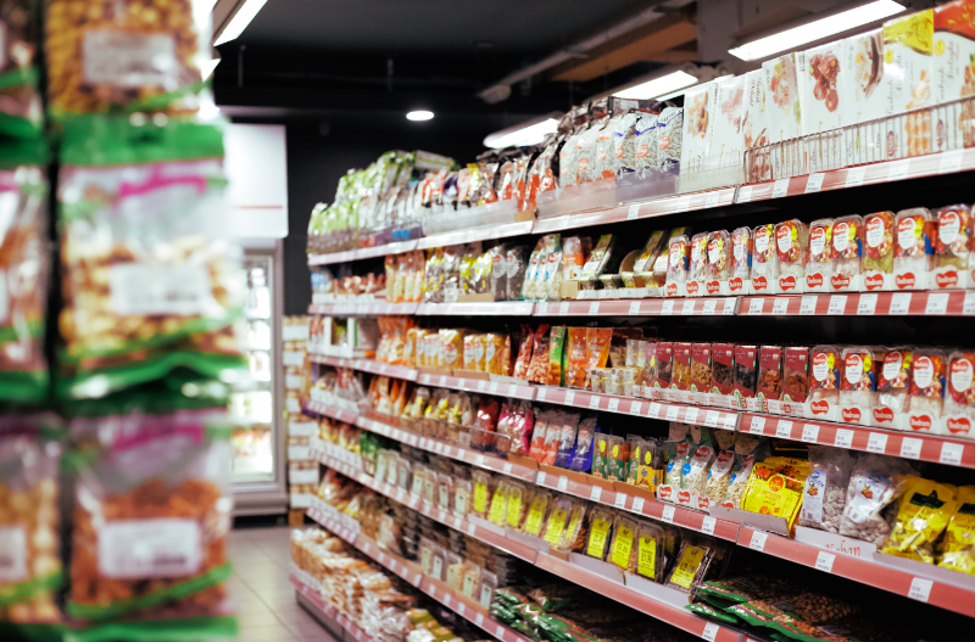
A convenience store can create several different security challenges within a relatively small space.
Bottled products, impulse merchandise, general merchandise, entrances, doors, checkout areas, and store sightlines may all require different approaches. That makes convenience store security less about finding one device and more about understanding what each area of the store needs.
A practical plan starts by separating those needs instead of treating the entire location as one security problem.
Start With the Merchandise
Different merchandise categories can require different types of protection.
A convenience store security setup may include EAS tags or labels for some products, while bottled merchandise may use bottle tags or specialized caps. Other items may need a mechanical or alarm-based solution depending on their location and level of risk.
This is why the product itself should come first in the planning process.
What is being protected? How is it displayed? How does the customer need to interact with it? How much control does the retailer want over access?
Those answers help determine which security approach makes sense.
Connect Merchandise Protection With EAS
For stores already using EAS, merchandise-level protection can become part of a larger system.
EAS towers, labels, and assorted tags can work together as part of the store’s overall approach.
The exact combination should still reflect the merchandise, store layout, customer preferences, and budget.
Not every item needs the same level of protection, and not every location needs the same security configuration.
The better approach is to identify where EAS makes sense and where another type of retail security may be more appropriate.
Look Beyond the Merchandise
Some convenience store security challenges are not solved by attaching something directly to a product.
Visibility matters too.
Mirrors, mirrored panels, and domes can help stores improve awareness around areas with limited sightlines. Dummy domes can provide another visual security element, while annunciators can help increase awareness of activity within the store.
These solutions serve a different purpose from product locks or EAS tags, but they can still be part of the same overall security plan.
A store may need direct merchandise protection in one area and better visibility in another.
Consider Doors and Access Points
Doors can create another separate security need.
Timed door alarms can be used where retailers want additional awareness or control around specific access points.
This illustrates an important part of convenience store security planning. The security question at a door is different from the question at a beverage display or merchandise fixture.
Breaking the store into zones can make those differences easier to identify.
Instead of asking, “What security system does this store need?” it can be more useful to ask what each part of the store needs.
Do Not Forget the Checkout Area
The checkout area may create another distinct challenge.
Impulse merchandise positioned near the register is meant to remain highly visible and accessible. Depending on the merchandise and risk level, an alarming micromini or another tethered solution may provide an additional option for protecting targeted products.
The goal is not necessarily to secure everything near the register.
It is to identify which merchandise warrants additional protection and choose a solution that still fits the way the area is used.
What Security Products Does a Convenience Store Need?
There is no universal list that applies to every location.
A convenience store may use some combination of EAS towers, EAS labels, merchandise tags, bottle protection, timed door alarms, mirrors, domes, annunciators, height strips, or security for impulse merchandise.
The right combination depends on the products being sold, store design, risk level, customer experience, budget, and existing security systems.
This is why convenience store security works best when retailers evaluate each part of the environment separately.
The strongest plan is not necessarily the one with the most products. It is the one that applies the appropriate type of protection where it is actually needed.
Stay Connected
Choosing the right retail theft prevention solutions starts with understanding your merchandise, your store layout, and your customer experience. A well-planned security approach can help stores protect different areas based on the needs of each environment.
Discover more insights on retail theft prevention, security hardware innovation, and display protection strategies on the Se-Kure Controls blog.