


Clothing stores face unique security challenges. Apparel is easy to handle, carry, and conceal, and busy retail environments can make it difficult for staff to monitor every customer and product. For this reason, investing in the right Anti Theft Devices For Clothing Store security can help retailers reduce losses, protect merchandise, and create a safer shopping environment.
However, choosing retail security equipment is not simply about purchasing the most expensive device available. Every clothing store has different layouts, product types, customer traffic, and security requirements. The right approach is to understand your store’s vulnerabilities and select security solutions that work together.
In this guide, we will explore the key factors to consider when choosing Anti Theft Devices For Clothing Store operations and how different solutions can support your retail security strategy.
Why Do Clothing Stores Need Anti-Theft Devices?
Retail theft can affect a store’s profitability, inventory accuracy, and overall operations. Clothing stores can be particularly vulnerable because merchandise is often displayed openly and customers need to handle products before making a purchase.
Effective security devices can help businesses:
• Discourage unauthorized removal of merchandise
• Protect high-value clothing and accessories
• Improve staff awareness
• Reduce inventory losses
• Monitor entrances and exits
• Improve overall store security
• Create a safer retail environment
• Support employees in identifying suspicious activity
The goal is not to make customers feel uncomfortable. Instead, an effective security system should provide discreet protection while allowing customers to shop conveniently
1. Assess Your Store’s Security Risks
Before purchasing Anti Theft Devices For Clothing Store solutions, evaluate how your store currently operates.
Look at areas such as:
• Store entrances and exits
• Fitting rooms
• High-value merchandise displays
• Accessories and small items
• Shelving arrangements
• Blind spots
• Checkout areas
• Storage rooms
• Emergency exits
Consider which areas receive the most customer traffic and where employees have limited visibility.
For example, a large clothing store with multiple entrances may need a different security setup from a small boutique with a single entrance. Understanding your specific risks helps you avoid purchasing unnecessary equipment.
2. Consider Electronic Article Surveillance Systems
Electronic Article Surveillance, commonly called EAS, is one of the widely used approaches to merchandise protection in retail environments.
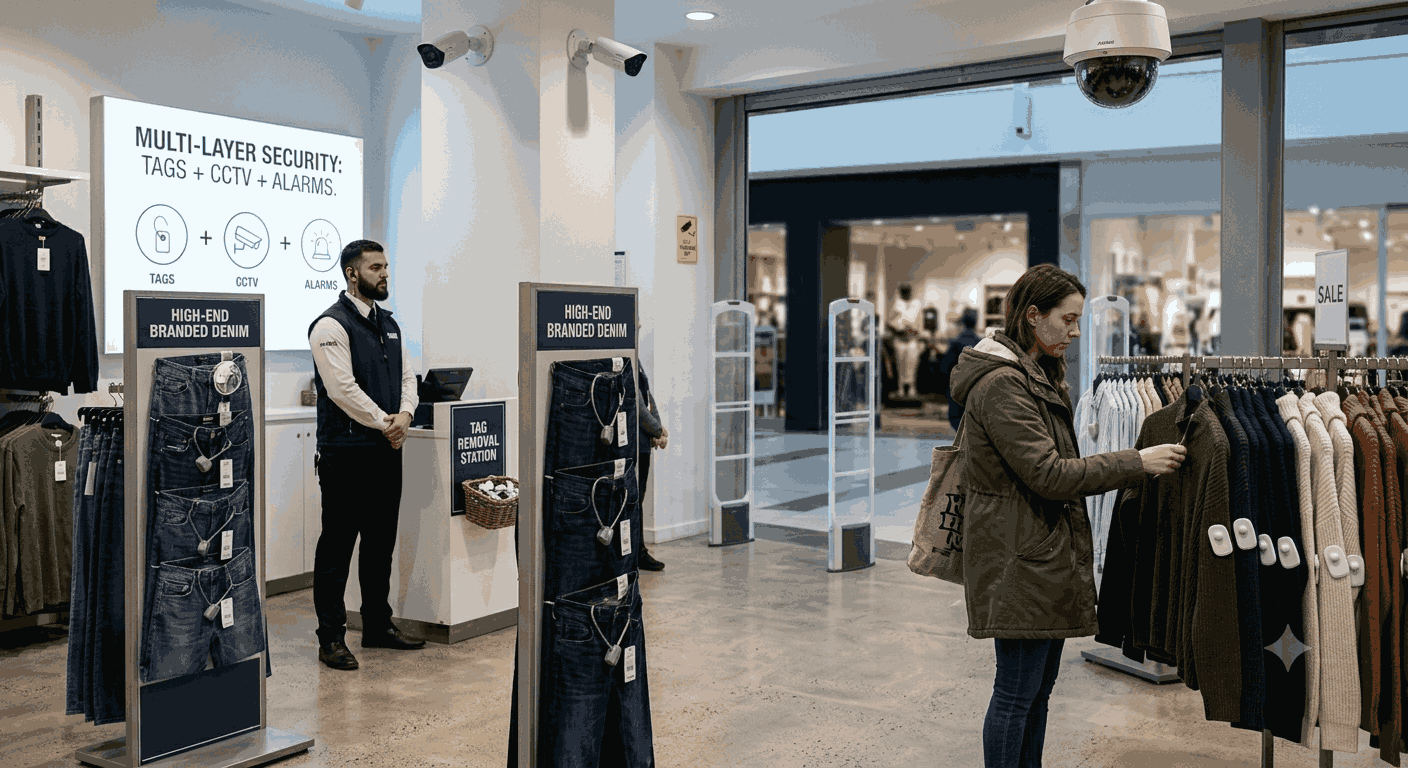
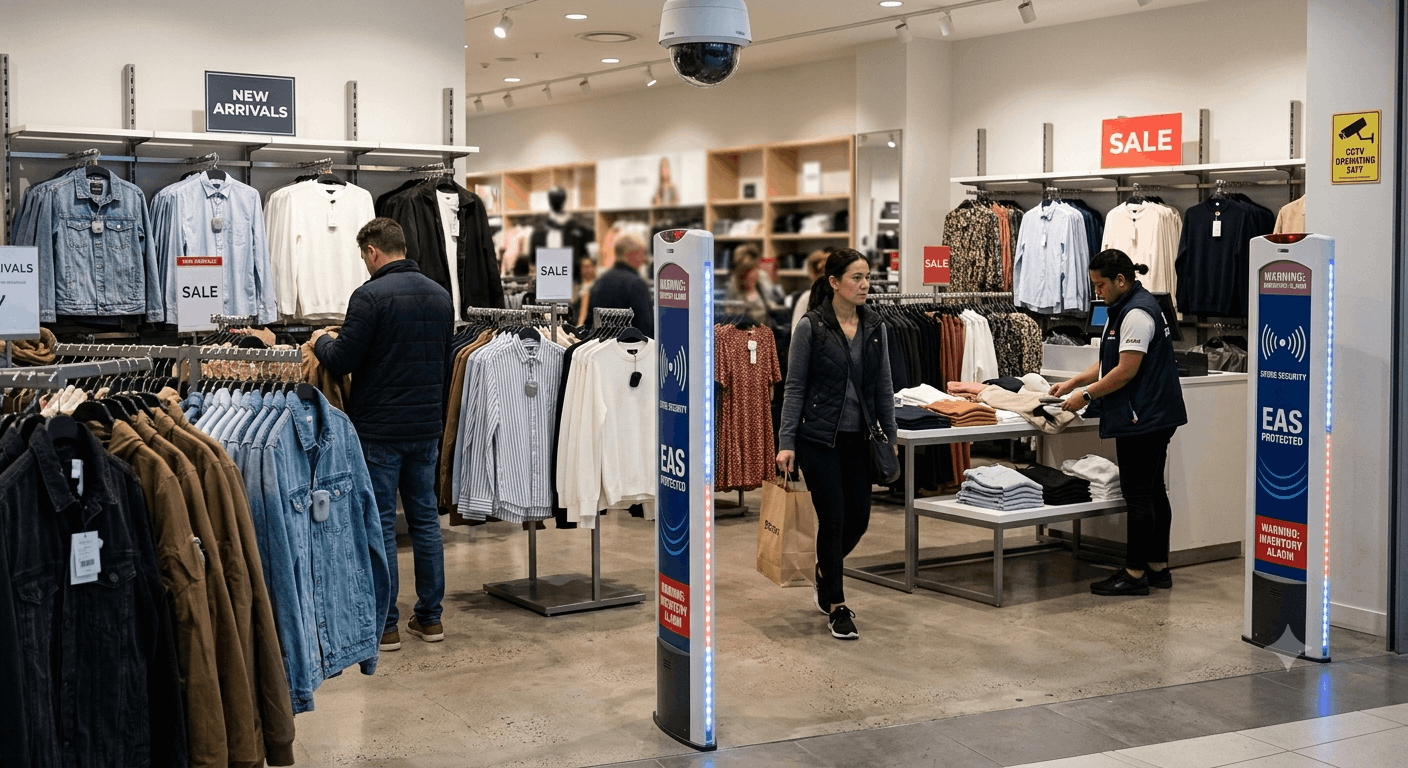
EAS systems generally consist of security tags or labels attached to merchandise and detection equipment positioned near store exits. When protected merchandise passes through the detection area without being properly deactivated or removed at checkout, the system can trigger an alert.
For clothing retailers, EAS can be useful because tags can be attached to many types of apparel and accessories.
When evaluating an EAS solution, consider:
• Detection performance
• Compatibility with your merchandise
• Tag options
• Store entrance width
• Installation requirements
• Checkout deactivation or removal process
• Ongoing maintenance
A properly planned EAS system can become an important component of a broader retail security strategy.
3. Choose the Right Security Tags
Not every clothing product requires the same type of security tag. Depending on the merchandise, retailers may consider different tag designs and attachment methods.
For example, clothing can use tags designed to attach securely to garments without unnecessarily affecting their appearance. Smaller accessories may require different protection methods.
When selecting tags, consider:
Product type: Choose tags suitable for the merchandise.
Visibility: Some retailers prefer visible security tags because they can act as a deterrent.
Durability: Tags should remain securely attached during normal customer handling.
Checkout process: Staff should be able to remove or deactivate tags efficiently when an item is purchased.
The right tagging strategy can help balance merchandise protection with customer convenience.
4. Protect Fitting Rooms
Fitting rooms deserve special attention in clothing stores because customers naturally take multiple garments into private areas.
Security should be designed around the store’s layout and operational policies rather than making customers feel monitored unnecessarily.
Useful approaches can include:
• Strategic camera placement in permitted areas
• Employee awareness
• Clear fitting-room procedures
• Appropriate merchandise controls
• Regular inventory checks
• Good visibility around fitting-room entrances
Security cameras should never be placed inside fitting rooms or other areas where customers have a reasonable expectation of privacy.
5. Consider Security Cameras
Video surveillance can complement other Anti Theft Devices For Clothing Store solutions by helping staff monitor activity throughout the premises.
Cameras can provide visibility around:
• Entrances
• Exits
• Checkout counters
• Sales floors
• Storage areas
• High-value merchandise sections
When choosing a surveillance system, consider image quality, camera positioning, recording capabilities, lighting conditions, storage requirements, and access controls.
The purpose should be to improve awareness and provide useful information when incidents occur—not simply to install cameras without a security plan.
6. Use Security Mirrors to Improve Visibility
Security mirrors can be a simple and cost-effective addition to a clothing store.
Strategically positioned mirrors can help employees and customers see around corners, shelves, and other areas that may otherwise be difficult to monitor.
They can be especially useful in stores with:
• Tall displays
• Narrow aisles
• Multiple sections
• Hidden corners
• Limited staff visibility
Mirrors work best when combined with good store layout and employee awareness.
7. Protect High-Value Merchandise
Not every product in your store necessarily needs the same level of protection.
Identify merchandise that has:
• Higher retail value
• Smaller physical size
• Strong resale demand
• Higher historical loss rates
These products may require additional security measures.
For example, expensive jackets, designer clothing, handbags, accessories, or other premium merchandise may benefit from enhanced protection compared with lower-value products.
A risk-based approach allows you to focus security resources where they are most valuable.
8. Think About Store Design and Customer Experience
Security equipment should fit naturally into your store.
Overly complicated or poorly positioned devices can interfere with customers, employees, and store aesthetics.
Before installation, consider how security equipment will affect:
• Customer movement
• Product displays
• Store appearance
• Accessibility
• Checkout operations
• Emergency access
A professional security plan should protect merchandise without creating unnecessary obstacles for legitimate shoppers.
9. Choose Scalable Security Solutions
Your security requirements may change as your business grows.
If you plan to open additional locations, expand your product range, redesign your store, or increase inventory, choose security solutions that can adapt to future requirements.
Ask potential security providers whether their systems can be expanded or upgraded.
Scalable solutions can help prevent the need to completely replace your security infrastructure when your business changes.
10. Consider Installation, Maintenance, and Support
Purchasing security equipment is only the beginning. Proper installation, testing, maintenance, and employee training can all affect how well a security system performs.
Before choosing a provider, ask:
• Who will install the equipment?
• Is professional installation available?
• What maintenance is required?
• Is technical support provided?
• How quickly can problems be addressed?
• Can staff receive training?
• Are replacement components available?
A reliable provider should be able to explain how the system will operate after installation.
11. Compare Security Providers Carefully
When comparing providers of Anti Theft Devices For Clothing Store solutions, don’t focus only on price.
Consider the provider’s:
• Industry experience
• Product quality
• Installation services
• Technical support
• Warranty options
• Maintenance services
• Customization capabilities
• Understanding of retail environments
A lower-cost system may not provide the value you need if it is difficult to maintain or does not suit your store’s requirements.
Create a Complete Retail Security Strategy
The best approach is usually not to depend on one security device. Instead, combine appropriate solutions based on your store’s needs.
For example, a clothing retailer might use:
EAS tags + exit detection + security cameras + security mirrors + employee awareness + effective store layout
Together, these measures can provide multiple layers of protection.
The objective is to discourage theft, improve visibility, and help employees respond appropriately—not to create an uncomfortable shopping environment.
Final Thoughts
Choosing the right Anti Theft Devices For Clothing Store security requires careful planning. Start by identifying your store’s vulnerabilities, understanding your merchandise, evaluating customer traffic, and determining where security improvements are most needed.
From EAS systems and security tags to cameras and strategically positioned mirrors, different technologies can serve different purposes. The right combination can help protect merchandise while maintaining a professional and welcoming retail environment.
Instead of choosing equipment based solely on price, consider reliability, compatibility, installation, maintenance, scalability, and long-term value.
Ready to Improve Your Clothing Store Security?
Protecting your merchandise starts with the right security strategy. Contact a professional retail security provider to evaluate your store and identify the Anti Theft Devices For Clothing Store solutions that best fit your merchandise, layout, and business needs.A customized approach can help you build stronger retail security while keeping the shopping experience convenient for your customers.
Frequently Asked Questions
1. What are the best anti-theft devices for a clothing store?
Common solutions include EAS systems, security tags, exit detection systems, surveillance cameras, and security mirrors. The best combination depends on your store’s layout, merchandise, and security risks.
2. Are EAS tags useful for clothing stores?
Yes. EAS tags can be used to protect many types of apparel and accessories. They can work as part of an electronic article surveillance system designed to detect protected merchandise leaving the store without proper checkout processing.
3. Should every+ clothing item have an anti-theft tag?
Not necessarily. Retailers can develop a risk-based tagging strategy based on product value, size, loss history, and other factors.
4. Can security cameras prevent retail theft?
Visible security cameras can contribute to deterrence and provide staff with better visibility. They can also provide useful recorded information when incidents occur, subject to applicable privacy and surveillance laws.
5. How much do anti-theft devices for clothing stores cost?
Costs vary based on the type of equipment, store size, number of protected products, installation requirements, and system features. A professional assessment can help determine the appropriate solution for your store.
What should I consider before buying retail security equipment?
Consider your store layout, merchandise, customer traffic, security risks, equipment compatibility, installation, maintenance, technical support, scalability, and overall customer experience.