



Retail theft can quietly become one of the biggest challenges for a store. A few missing products may not seem serious at first, but repeated shoplifting, organized theft, employee-related losses, and inventory discrepancies can quickly affect profits. For retailers, preventing these losses is not only about protecting merchandise—it is also about creating a secure and comfortable environment for employees and customers.
The right Retail Theft Prevention Strategies can help businesses identify vulnerable areas, discourage shoplifting, and respond to suspicious activity more effectively. Instead of depending on one security measure, retailers can combine visibility, technology, employee awareness, and better inventory practices to create multiple layers of protection.
Below are seven practical approaches that retailers can use to strengthen store security and reduce theft.
Why Retail Theft Prevention Should Be a Priority
Every retail business has different security challenges. A clothing store may experience problems with concealed merchandise, while an electronics retailer may need additional protection for expensive products. Convenience stores, pharmacies, supermarkets, and specialty shops can all face different types of theft.
- An effective loss-prevention program can help retailers:
- Reduce merchandise losses and inventory shrinkage
- Protect high-value and vulnerable products
- Improve visibility across the sales floor
- Make employees more aware of potential risks
- Discourage opportunistic shoplifting
- Create safer working conditions
- Improve overall store operations
The objective is not to make customers feel like they are being watched constantly. Instead, security should be integrated naturally into the shopping environment.
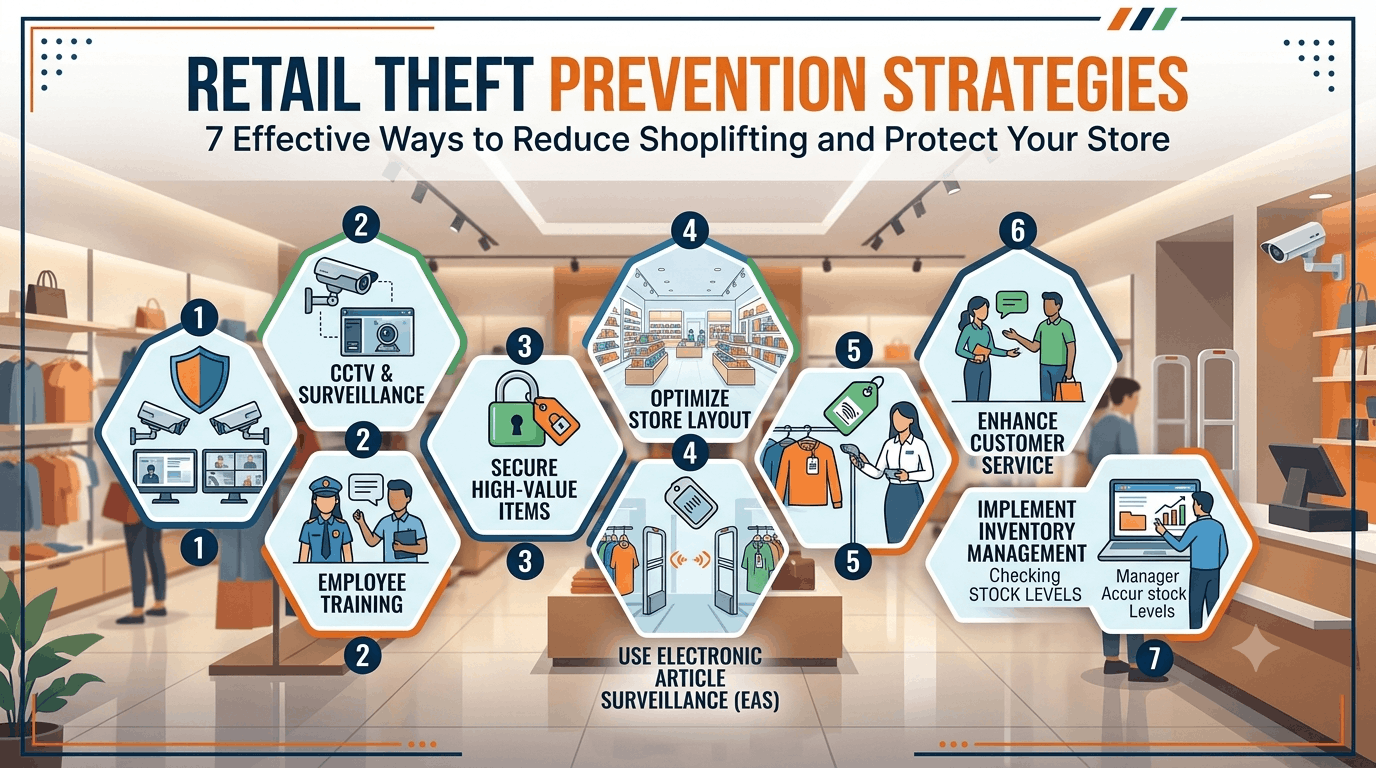
7 Retail Theft Prevention Strategies That Can Protect Your Store
1. Improve Visibility With Security Mirrors and Domes
Blind spots can give shoplifters an opportunity to conceal merchandise without being noticed. One of the easiest ways to address these areas is by improving visibility throughout the store.
Convex security mirrors can provide a wider view of aisles, corners, and other difficult-to-monitor locations. Security domes can also increase visibility and make security measures more noticeable to customers.
Where Should Security Mirrors Be Installed?
- Retailers can consider placing mirrors:
- Near corners and aisle intersections
- Around tall shelving units
- Near areas containing frequently stolen products
- Close to entrances and exits
- In locations that are difficult for employees to monitor
Products such as Se-Kure® domes and mirrors can complement other security measures and help employees maintain better awareness of the sales floor.
However, placement is important. A poorly positioned mirror may provide limited coverage, so retailers should review their store layout before installation.
2. Design the Store to Reduce Hidden Areas
Store layout has a direct impact on security. Tall displays, crowded shelves, poor lighting, and enclosed corners can make it difficult for employees to observe customer activity.
A more open layout allows staff to maintain better visibility while also making the shopping experience easier for customers.
Simple Layout Improvements
- Retailers can:
- Keep important aisles clear
- Avoid unnecessary visual barriers
- Place expensive products in visible locations
- Position checkout areas strategically
- Improve lighting in darker sections
- Keep frequently stolen merchandise closer to staffed areas
The goal is to eliminate unnecessary hiding places without making the store feel restrictive.
3. Protect Merchandise With Electronic Security Systems
Technology can provide an additional layer of protection for products that are frequently targeted by shoplifters.
Electronic Article Surveillance (EAS) systems use tags or labels that can trigger an alarm when protected merchandise passes through a detection area without being properly deactivated or removed.
EAS can be useful for products such as clothing, electronics, cosmetics, accessories, and other easily concealed merchandise.
Why EAS Can Be Useful
A properly implemented system can:
Discourage casual shoplifting
Draw employee attention to unauthorized product movement
Protect selected high-risk merchandise
Reduce the need for constant manual observation
Retailers should ensure that employees understand how the system works and how to respond when an alarm is triggered. Equipment should also be checked regularly to maintain reliable performance.
4. Train Employees to Recognize and Report Suspicious Activity
Technology is valuable, but employees remain an important part of retail security. Staff members interact with customers every day and may notice unusual behavior before a security system does.
Training should focus on awareness rather than confrontation. Employees need to know how to identify potential concerns, communicate with supervisors, and follow company procedures safely.
- Employee Training Should Cover:
- Store security policies
- Common causes of inventory loss
- Proper use of security equipment
- Procedures for reporting suspicious activity
- How to respond to security alarms
- Incident documentation
- Customer-service techniques
- Personal safety and emergency procedures
Employees should never be encouraged to put themselves at risk to recover merchandise. A clear reporting process gives staff a safer and more professional way to handle potential incidents.
5. Strengthen Inventory Control
Not every inventory discrepancy is caused by shoplifting. Products can also disappear because of administrative errors, damaged merchandise, incorrect shipments, fraudulent returns, or internal theft.
For this reason, accurate inventory management should be an important part of any retail security program.
Ways to Improve Inventory Control
- Retailers can:
- Perform regular stock checks
- Monitor products with frequent shortages
- Compare physical inventory with sales records
- Track returns and exchanges carefully
- Restrict unnecessary stockroom access
- Investigate repeated discrepancies
- Maintain accurate receiving records
When businesses know which products are disappearing and when losses occur, they can identify patterns and focus security efforts where they are most needed.
6. Use CCTV to Monitor High-Risk Areas
Security cameras can provide valuable visibility across a retail location. They can help employees monitor important areas and give management an opportunity to review incidents when necessary.
- Cameras are particularly useful around:
- Entrances and exits
- Checkout counters
- High-value merchandise
- Stockrooms
- Loading areas
- Areas with limited natural visibility
- Make CCTV More Effective
Simply installing cameras is not enough. Retailers should ensure that cameras provide useful coverage, recordings are stored appropriately, and equipment is regularly maintained.

Camera placement should focus on areas where security visibility is most valuable. Businesses should also follow applicable privacy requirements and restrict access to recorded footage.
CCTV works best as part of a wider security system rather than as a standalone solution.
7. Create a Clear Loss-Prevention Policy
Employees need clear instructions about what to do when they notice suspected theft. Without a defined procedure, different staff members may react differently, potentially creating unnecessary risks.
A written loss-prevention policy can establish consistent expectations for employees and managers.
What Should a Retail Security Policy Include?
- A useful policy may cover:
- How suspicious behavior should be reported
- Who employees should notify
- How security alarms should be handled
- How incidents should be documented
- When managers or security personnel should become involved
- How relevant CCTV footage should be preserved
- Emergency procedures
- Employee and customer safety guidelines
The policy should emphasize safety. Merchandise can be replaced; an employee’s safety cannot.
How to Combine These Strategies for Better Results
The strongest Retail Theft Prevention Strategies usually involve several security measures working together.
For example, a retailer could use security mirrors to eliminate blind spots, CCTV to monitor important areas, EAS to protect selected products, and employee training to ensure suspicious activity is reported correctly.
Retailers should begin by conducting a basic security assessment. Identify which products disappear most often, where blind spots exist, and which parts of the store require additional monitoring.
Once weaknesses are identified, businesses can prioritize improvements according to risk and budget.
Avoid These Common Retail Security Mistakes
Even a well-equipped store can remain vulnerable if basic security practices are overlooked.
- Common mistakes include:
- Leaving expensive merchandise in poorly monitored areas
- Allowing displays to block important sightlines
- Ignoring repeated inventory discrepancies
- Failing to maintain security equipment
- Providing employees with little or no security training
- Relying exclusively on CCTV
- Having no clear process for handling suspected theft
Regularly reviewing security procedures can help retailers identify new risks as their store layout, inventory, and customer traffic change.
Frequently Asked Questions About Retail Theft Prevention Strategies
1. What are the best Retail Theft Prevention Strategies for a small store?
Small retailers can start with affordable measures such as better lighting, improved store visibility, convex mirrors, organized product placement, employee training, and regular inventory checks. Additional technology can be introduced as the store identifies specific security needs.
2. Can security mirrors actually help reduce shoplifting?
Security mirrors can improve visibility around corners, aisles, and other areas that employees cannot easily see. They may also act as a visible deterrent. Their effectiveness depends on appropriate placement and how well they are combined with other security practices.
3. Is CCTV enough to prevent retail theft?
No. CCTV can improve monitoring and help document incidents, but cameras alone cannot prevent every theft. Combining video surveillance with employee awareness, inventory controls, merchandise protection, and good store design provides a more comprehensive approach.
4. How can retailers protect expensive products?
High-value products can be positioned in visible locations, placed near staffed areas, protected with appropriate security devices, and monitored through CCTV or electronic article surveillance. Retailers should also track these products carefully through inventory systems.
5. What should employees do if they suspect shoplifting?
Employees should follow the store’s established procedures and prioritize personal safety. They should report concerns to the appropriate manager or security personnel rather than taking unnecessary risks or physically confronting a suspected shoplifter.
Build a Safer and More Secure Retail Environment
Preventing retail theft does not require retailers to rely on one complicated solution. A combination of better visibility, appropriate security equipment, employee training, accurate inventory management, surveillance, and clear procedures can significantly strengthen a store’s overall security approach.
Every retail business has different risks, so the best strategy begins with understanding where losses are occurring and why. From there, retailers can introduce practical security improvements that protect merchandise without negatively affecting the customer experience.
Ready to strengthen your store’s security? Explore professional retail security solutions from Se-Kure and discover options designed to improve visibility and help retailers address shoplifting and merchandise-loss concerns. A proactive approach today can help create a safer, more secure, and better-managed retail environment tomorrow.
- Tips for Effective CCTV Use
- Install cameras at important entry and exit points.
- Ensure high-risk areas have adequate coverage.
- Check that recordings are clear and properly stored.
- Maintain cameras and replace faulty equipment.
- Restrict access to security footage.
- Follow applicable privacy and data-protection requirements.
CCTV works best when combined with trained employees, good lighting, and clear store policies. Cameras provide useful information, but they do not replace active security awareness.
7. Develop a Clear Theft-Response and Loss-Prevention Policy
A written loss-prevention policy helps employees understand what to do when theft is suspected. Without clear procedures, staff may respond inconsistently or take unnecessary risks.
A good policy should explain how to report incidents, who should be contacted, and when law enforcement or security personnel should be involved.
- Elements of an Effective Theft-Response Policy
- Clear reporting procedures for suspected theft.
- Guidelines for responding to EAS alarms.
- Instructions for documenting incidents.
- Rules for handling suspected employee theft.
- Emergency contact information.
- Procedures for preserving relevant CCTV footage.
- Guidance on customer safety and employee safety.
- Regular reviews to improve security practices.
Retailers should prioritize safety over merchandise recovery. Employees should avoid physical confrontation and follow company policies and applicable laws when responding to suspected theft.
How to Build a Complete Retail Security Plan
Implementing individual security measures is helpful, but combining them into a structured plan delivers better results. Retailers should begin by identifying their most vulnerable areas and understanding the types of theft they experience.
A practical security plan may include:
Risk assessment: Identify blind spots, high-risk products, and recurring inventory discrepancies.
Security improvements: Install suitable domes, mirrors, cameras, alarms, or product-protection systems.
Employee education: Train staff in observation, reporting, and safe incident response.
Inventory monitoring: Track stock movement and investigate unusual losses.
Performance reviews: Evaluate shrinkage, security incidents, and customer feedback.
Businesses should measure results over time rather than expecting immediate improvements from one security upgrade.
Common Mistakes Retailers Should Avoid
Inadequate implementation of certain security procedures can lead to further issues. Retailers should avoid relying entirely on visible cameras, ignoring inventory records, or failing to train employees.
- Other common mistakes include:
- Blocking aisles with oversized displays.
- Leaving expensive products unattended.
- Ignoring repeated security-alarm incidents.
- Failing to maintain cameras and mirrors.
- Applying inconsistent return policies.
- Asking untrained employees to confront suspected shoplifters.
A balanced approach helps protect merchandise without creating an uncomfortable or unwelcoming shopping experience.
Frequently Asked Questions About Retail Theft Prevention Strategies
1. What are the best methods for preventing retail theft?
The most effective retail theft prevention strategies combine employee training, improved store visibility, inventory controls, CCTV, electronic article surveillance, security mirrors, and clear response procedures. In general, a multi-layered security strategy works better than a single approach.
2. How can mirrors and security domes deter shoplifting?
Mirrors and security domes increase visibility in places that are difficult for workers to see. They can help reduce blind spots, support staff monitoring, and act as a visible deterrent. Their effectiveness depends on proper placement and regular maintenance.
3. Is CCTV enough to stop retail theft?
No. CCTV can help monitor store activity and provide useful footage when incidents occur, but it does not prevent every theft. Combining cameras with employee awareness, inventory controls, good lighting, and other security measures creates a stronger prevention plan.
4. How can small retail stores reduce shoplifting on a limited budget?
Small retailers can begin with affordable measures such as improving lighting, rearranging displays, installing convex mirrors, training employees, and conducting regular stock counts. They can then invest in cameras, EAS, and other security equipment based on identified risks.
5. Should retail employees confront suspected shoplifters?
Employees should follow their employer’s safety policies and applicable laws. In general, they should avoid physical confrontation and prioritize personal safety. Suspicious activity should be reported to a supervisor or appropriate security personnel, and emergency services should be contacted when necessary.
Protect Your Store With Smarter Security Solutions
It takes more than just keeping an eye on the checkout counter to prevent retail fraud. By combining effective security equipment, organized store layouts, trained employees, accurate inventory controls, and clear response procedures, retailers can reduce theft risks and create a safer environment.
Whether you operate a small shop or a large retail business, the right prevention strategy can protect merchandise, improve operational efficiency, and support long-term profitability.
Looking for reliable retail security solutions? Explore professional products and loss-prevention options from Se-Kure to discover how security domes, mirrors, and other retail protection solutions can support your store’s security needs. Take the next step toward a safer, more secure retail environment today.
Read More:
Best Anti Theft Devices for Clothing Store Security in 2026
Retail Anti-Theft Solutions: Effective Ways to Prevent Shoplifting
Retail Store Security Illinois: Effective Retail Security Solutions & Theft Prevention Strategies