


Retail theft is one of the fastest-growing challenges facing store owners across the state, and retail store security Illinois solutions have never been more important. From small boutiques in Naperville to big-box stores in Chicago’s Loop, retailers are dealing with rising shrinkage, organized theft rings, and increasingly sophisticated shoplifting tactics.
If you’re a business owner or loss prevention manager trying to figure out how to protect your store — without overspending or running afoul of state regulations — this guide breaks down everything you need to know: the threats, the systems, the costs, and the compliance rules unique to Illinois.
Why Retail Security Matters in Illinois
Illinois retailers face a unique mix of challenges. Chicago and its surrounding suburbs have seen well-publicized spikes in organized retail crime (ORC), where coordinated groups target multiple stores to steal merchandise for resale. Meanwhile, smaller cities and rural areas deal with more traditional shoplifting and employee theft.
A few factors make loss prevention Illinois strategies especially important right now:
Organized retail crime has become a growing statewide concern, prompting increased attention from Illinois lawmakers and law enforcement task forces.
Retail theft penalties in Illinois scale with the value of stolen goods, but repeat offenses and organized crime cases carry harsher consequences — which is part of why documentation (cameras, incident reports) matters so much.
Insurance premiums for retail businesses are increasingly tied to a store’s documented security measures, making investment in security systems a financial as well as safety decision.
Whatever your store size, the goal is the same: reduce shrinkage, protect employees and customers, and create a documented, defensible security posture.
Common Security Threats Facing Illinois Retailers
Before choosing solutions, it helps to understand what you’re actually defending against.
Shoplifting
Still the most common form of retail loss, ranging from opportunistic theft to coordinated “booster” crews who target specific high-value items.
Employee Theft
Internal theft — through register manipulation, inventory fraud, or collusion with outside thieves — often accounts for a larger share of shrinkage than shoplifting, but gets far less attention.
Organized Retail Crime (ORC)
Groups that systematically target multiple stores, often reselling stolen goods online. ORC has become a major focus for Illinois retailers and law enforcement alike.
Robbery and Violent Incidents
Particularly relevant for stores open late or located in high-traffic urban areas, where employee and customer safety is the top priority.
Vandalism and Property Crime
Break-ins, window damage, and after-hours property crime affect both revenue and insurance costs.
Retail Security Solutions Available in Illinois
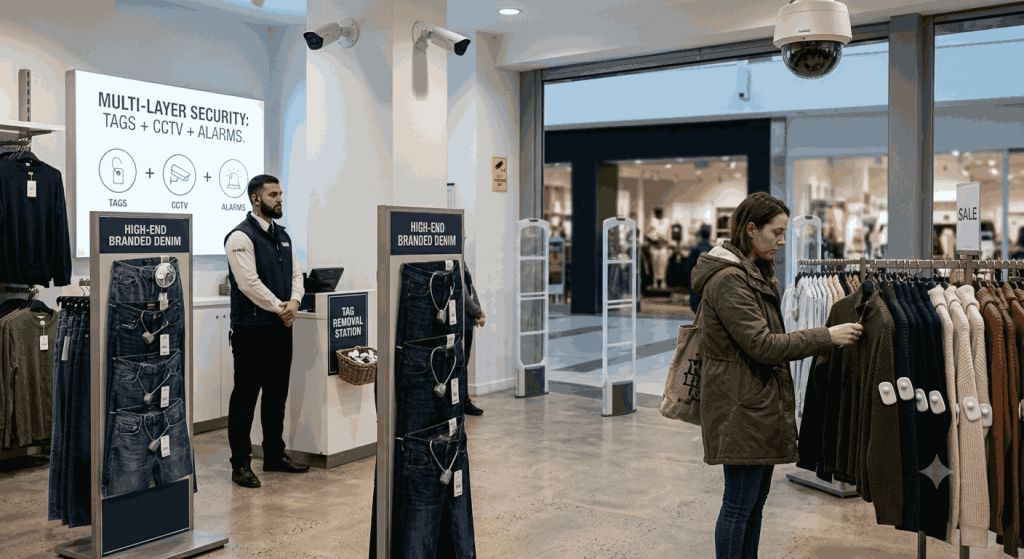
Most effective security strategies combine several layers of protection rather than relying on a single system.
CCTV and Video Surveillance
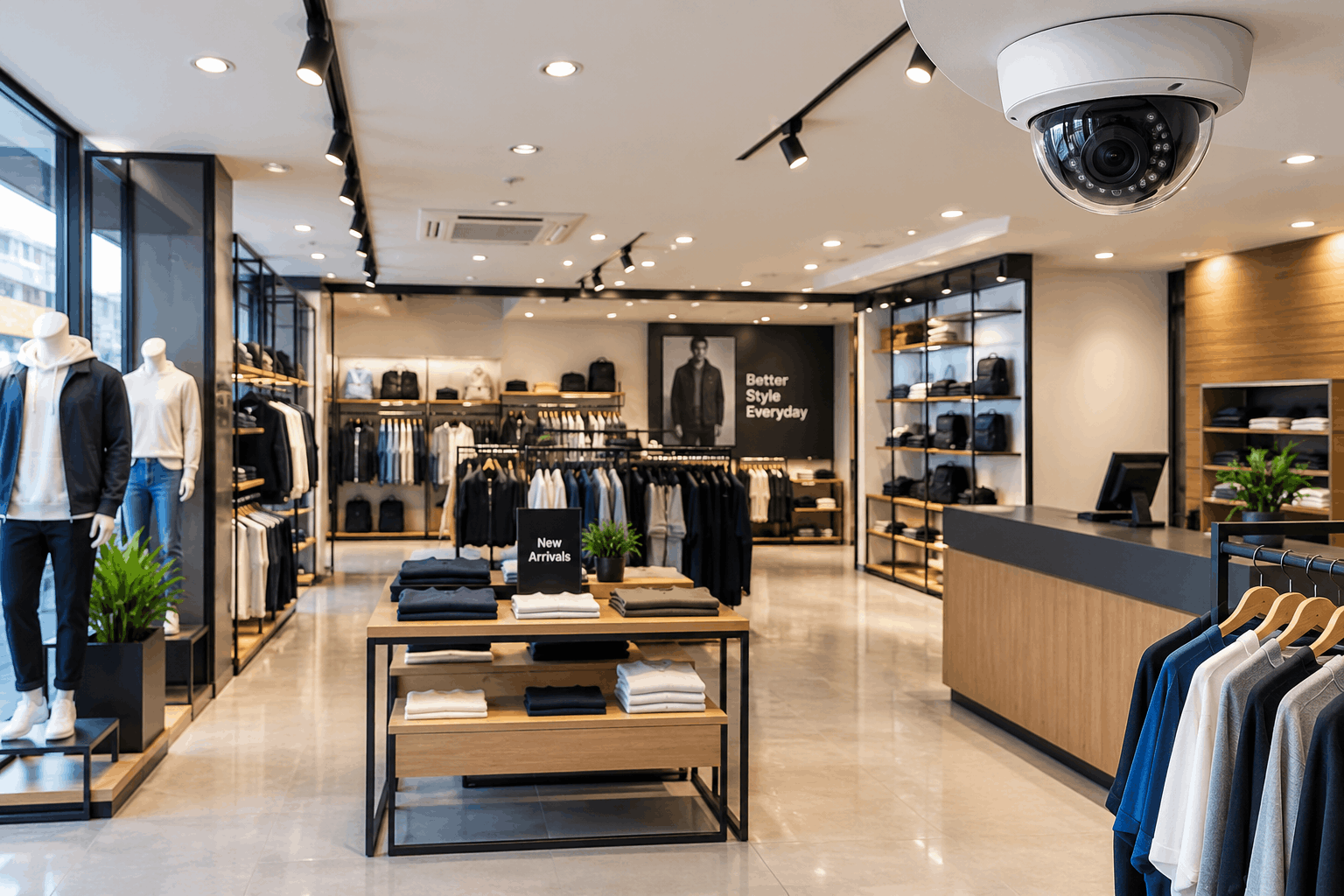
Retail CCTV systems Illinois retailers install today go far beyond simple recording. Modern systems offer:
High-definition, cloud-based storage
AI-powered motion and behavior detection
Remote monitoring via smartphone apps
Integration with point-of-sale systems to flag suspicious transactions
Security Guards
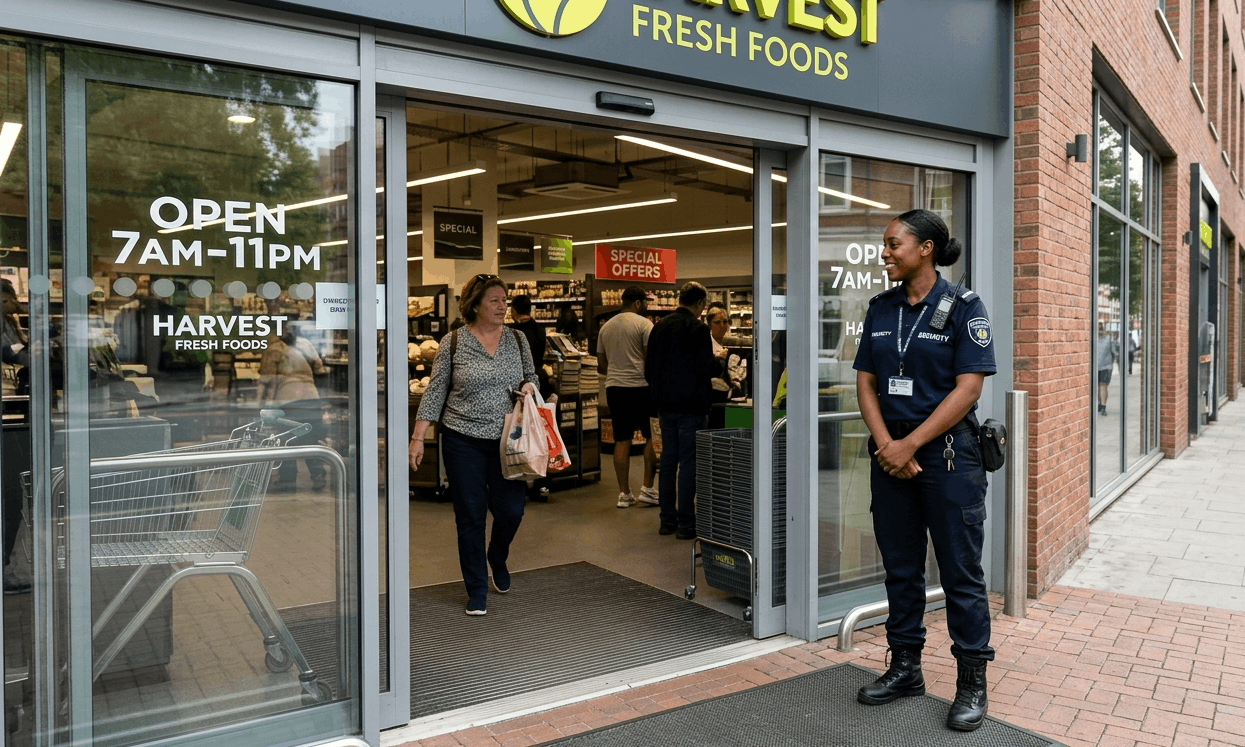
Security guards for retail stores provide a visible deterrent and immediate response capability that cameras alone can’t match. Options include:
Uniformed, visible guards for deterrence
Plainclothes loss prevention officers for high-shrinkage stores
Armed guards for high-risk locations (subject to Illinois licensing requirements)
Electronic Article Surveillance (EAS)
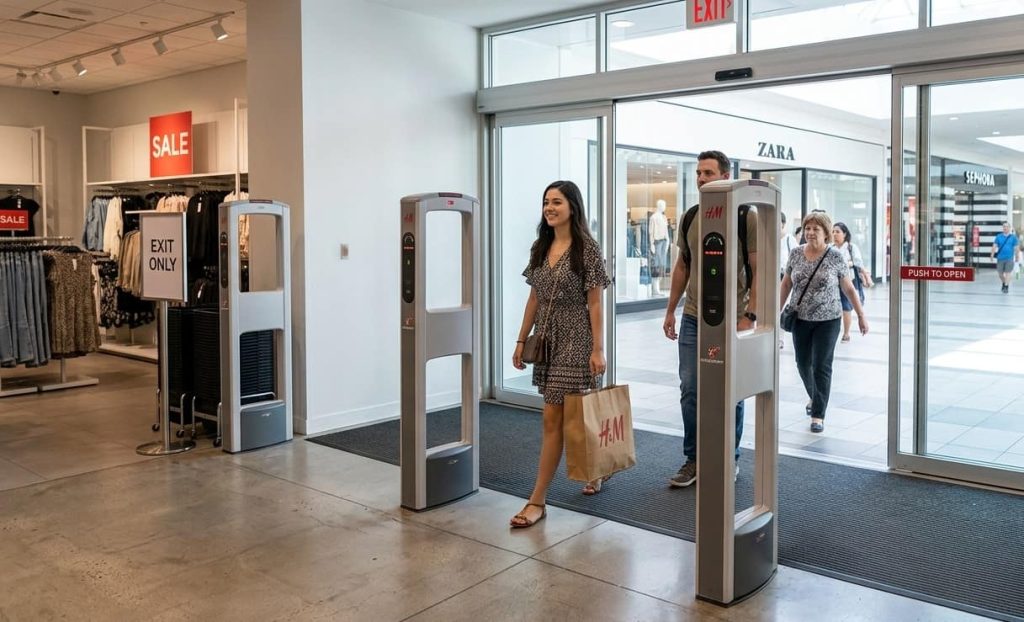
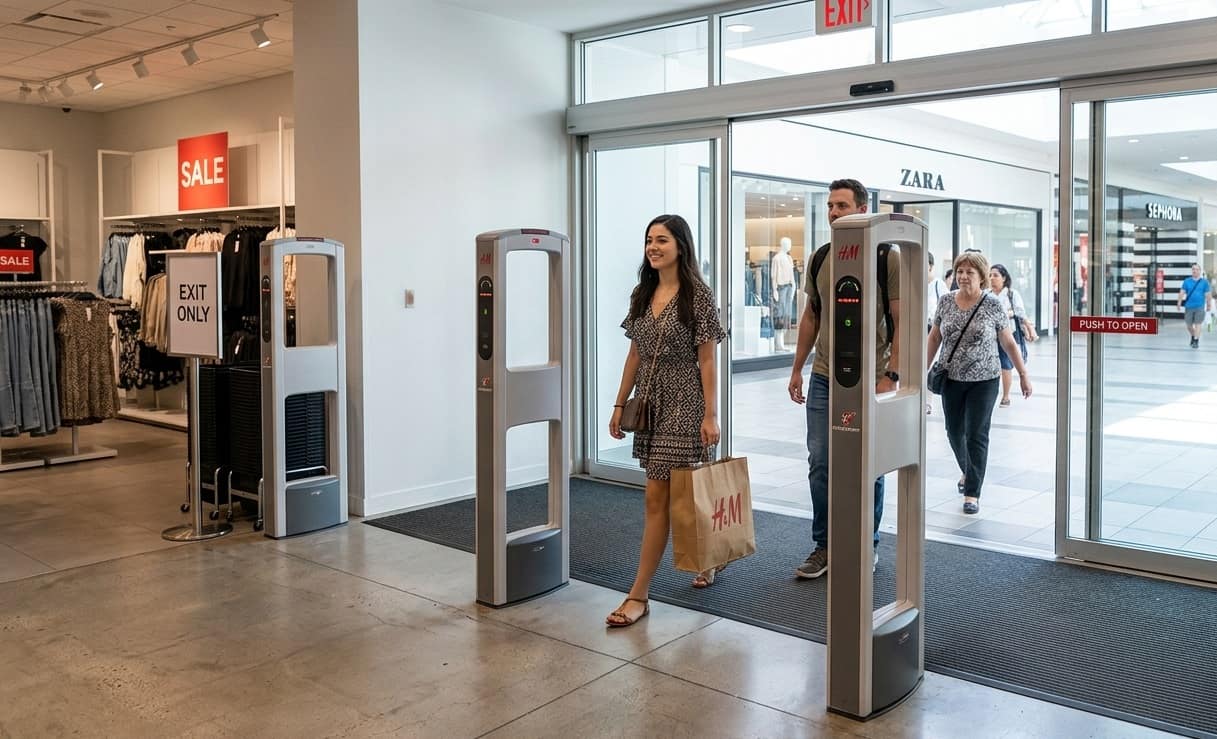
The familiar tag-and-gate systems used at store exits remain one of the most cost-effective shoplifting prevention tips for small and mid-sized retailers.
Access Control Systems
Keycard or PIN-based access to stockrooms, offices, and after-hours entry points helps limit internal theft opportunities and controls who can enter secure areas.
Alarm Systems and Monitoring
24/7 monitored alarm systems protect against break-ins outside business hours and are often a factor in reduced insurance premiums.
Point-of-Sale (POS) Monitoring Software
Software that flags unusual transaction patterns — excessive voids, discounts, or returns — helps catch employee theft that cameras might miss.
Illinois-Specific Licensing and Compliance Requirements
Unlike some states, Illinois has clear licensing rules that apply to security personnel — and retailers need to understand them before hiring a security provider.
PERC Cards for Security Guards
Anyone working as a security guard in Illinois must hold a valid PERC (Permanent Employee Registration Card), issued by the Illinois Department of Financial and Professional Regulation (IDFPR) under the Illinois Private Detective, Private Alarm, Private Security, Fingerprint Vendor, and Locksmith Act. To obtain a PERC, guards generally must:
Hold a high school diploma or GED
Complete IDFPR-approved basic training
Pass a fingerprint-based background check
Renew the card periodically (PERC cards are typically valid for a set multi-year term)
Firearm Control Cards (FCC)
Armed guards require an additional Firearm Control Card, which involves separate firearms training, a minimum age requirement, and a valid PERC as a prerequisite.
Licensed Security Contractor Agencies
If you’re contracting with a third-party security firm, confirm the agency itself is properly licensed as a private security contractor in Illinois — not just that individual guards hold PERC cards.
Compliance tip: Always ask a prospective retail security systems Illinois vendor or guard service for proof of current licensing before signing a contract. In the event of an occurrence, this shields your company from culpability.
Cost Considerations for Retail Security in Illinois
Security spending should scale with your store’s risk profile, size, and location. Rough cost categories to budget for include:
CCTV systems: Entry-level setups for small stores cost considerably less than enterprise-grade, AI-integrated systems for multi-location retailers.
Security guards: Costs vary based on whether guards are armed or unarmed, full-time or part-time, and whether they’re contracted through an agency or hired directly.
EAS systems: Generally one of the lower-cost options relative to the theft reduction they provide, especially for apparel and small-goods retailers.
Alarm monitoring: Typically a modest recurring monthly fee on top of installation costs.
Access control systems: Costs scale with the number of doors, employees, and integration complexity.
Because pricing varies significantly by provider, store size, and location within Illinois, it’s worth requesting quotes from multiple vendors and comparing not just price, but response times, contract terms, and licensing compliance.
Best Practices for Illinois Retail Store Owners
A few actionable steps can meaningfully reduce shrinkage without a huge budget increase:
Layer your defenses. Combine cameras, EAS tags, and staff training rather than relying on one system alone.
Train employees to recognize theft patterns without escalating confrontations — de-escalation training reduces liability risk.
Audit your POS data regularly for unusual voids, discounts, or return patterns.
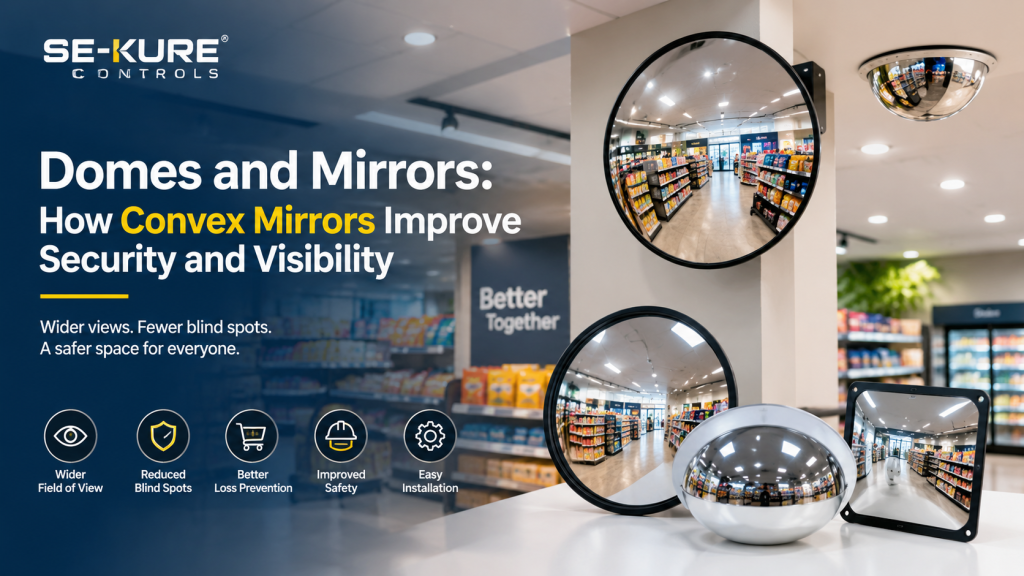
Improve store layout and sightlines so staff can naturally observe high-theft areas.
Document every incident thoroughly — this supports both prosecution and insurance claims.
Review your security plan annually, especially if you’ve expanded, relocated, or seen a change in local crime trends.
How to Choose the Right Security Partner in Illinois
When evaluating a retail store security Illinois provider, ask:
Are your guards and technicians properly licensed under Illinois law (PERC, FCC where applicable)?
Do you have experience with retail-specific security, not just general commercial properties?
What’s your response time for alarm monitoring or emergency dispatch?
Can your systems integrate with our existing POS and inventory software?
What does your contract include — maintenance, monitoring, and system upgrades?
A good partner will walk your store, assess your specific risk factors, and recommend a tailored mix of solutions rather than a one-size-fits-all package.
Frequently Asked Questions
Do Illinois retail stores require licensed security guards?
Yes — anyone working as a security guard in Illinois, including retail loss prevention officers, must hold a valid PERC card issued by the IDFPR. Armed guards need an additional Firearm Control Card.
What’s the most cost-effective security solution for a small retail store?
A combination of EAS tags at exits and a basic CCTV system typically offers the best theft-reduction-to-cost ratio for smaller retailers.
How much does retail security cost in Illinois?
Costs vary widely based on store size, guard hours, and system complexity. It’s best to get quotes from a few licensed providers to compare pricing based on your specific store’s needs.
Can security cameras alone stop shoplifting?
Cameras are a strong deterrent and provide critical evidence, but they work best combined with staff training, EAS systems, and clear store signage — not as a standalone solution.
What should I do if my store experiences organized retail crime?
Document the incident thoroughly (video, transaction records, physical descriptions), report it to local law enforcement, and consider working with a security provider experienced in ORC prevention strategies.
Ready to Secure Your Illinois Retail Store?
Protecting your store, employees, and bottom line starts with the right security partner. Contact a licensed Illinois retail security provider today for a free consultation and custom quote tailored to your store’s specific risks and budget.