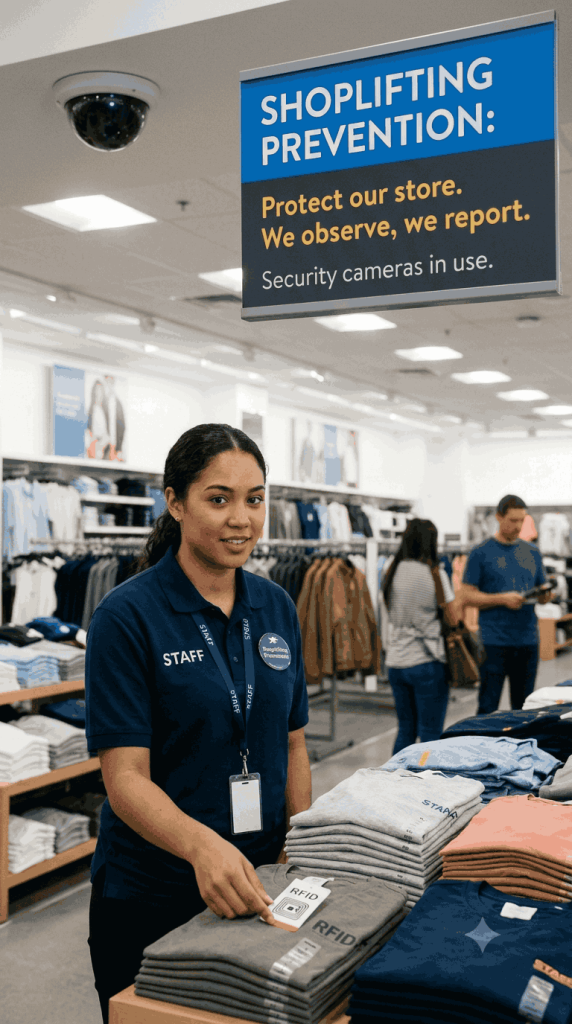



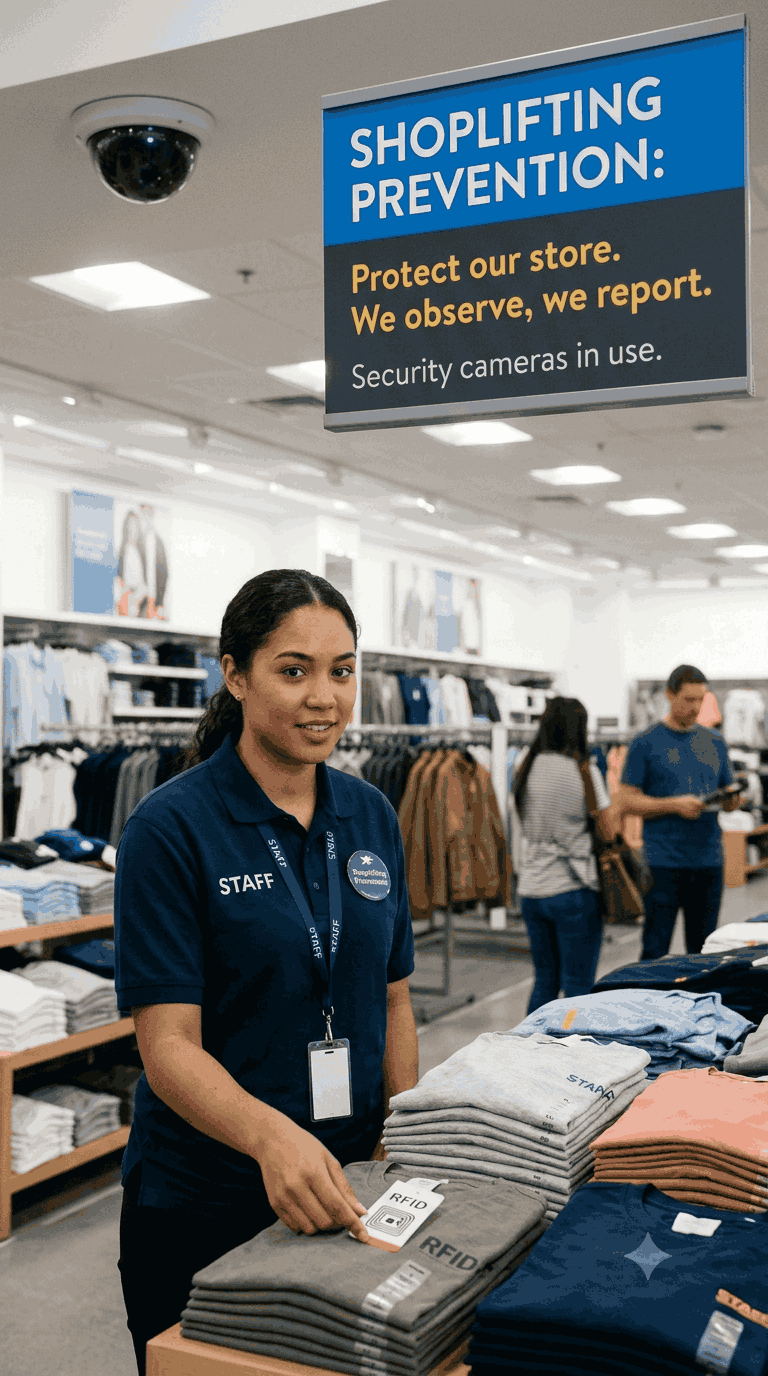
For retailers of all sizes, shoplifting is a frequent problem. From small boutiques to large supermarkets, businesses can experience inventory losses, increased operating costs, and reduced profits because of retail theft. A few stolen products may seem insignificant, but repeated incidents can create serious financial problems over time.
Effective Shoplifting Prevention involves more than installing security cameras or placing warning signs around a store. It requires a combination of smart store design, employee training, reliable anti-theft technology, inventory monitoring, and excellent customer service. When these measures work together, retailers can create a safer shopping environment while protecting their merchandise and customers.
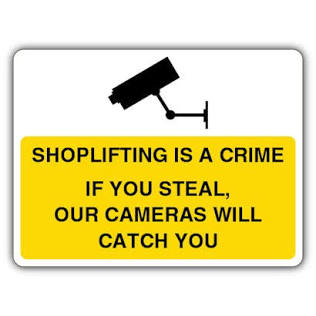
In this guide, we explore practical Shoplifting Prevention strategies that retail businesses can implement to reduce theft, improve security, and maintain better control over inventory.
Why Is Shoplifting Prevention Important for Retail Stores?
Retail theft directly affects a store’s profitability. When merchandise disappears without payment, businesses must absorb the cost or adjust their pricing to compensate for losses. Frequent theft can also create additional expenses related to inventory replacement, security equipment, insurance, and staff training.
A well-planned Shoplifting Prevention strategy helps retailers address these challenges before they become major problems.
Here are some key benefits:
Reduced inventory losses: Anti-theft measures help protect valuable merchandise.
Improved profitability: Lower theft-related losses help businesses manage operating costs.
Better employee safety: Clear procedures help employees respond appropriately to suspicious situations.
Improved inventory accuracy: Regular stock checks help identify discrepancies and potential theft patterns.
Enhanced customer experience: A well-organized, secure store creates a more comfortable shopping environment.
The goal is not to make customers feel unwelcome. Instead, retailers should create a balance between effective security and convenient shopping.
1. Install Security Cameras in Strategic Locations
Security cameras are an important part of modern retail security. They help monitor store activity, discourage potential theft, and provide footage that authorized personnel can review when investigating incidents.
For effective Shoplifting Prevention, cameras should cover important areas, including store entrances, exits, checkout counters, high-value merchandise sections, and locations with limited visibility.
Retailers should consider the following practices:
Install cameras that provide clear images under the store’s lighting conditions.
Reduce blind spots by reviewing camera coverage regularly.
Use visible cameras where appropriate to communicate that security is a priority.
Maintain recording equipment and check that footage is being saved correctly.
Restrict access to recordings and follow applicable privacy laws.
Camera placement should support store-wide visibility without unnecessarily recording private areas. For larger stores, a professionally designed surveillance system can help improve coverage and monitoring efficiency.
2. Use Anti-Theft Devices and Electronic Article Surveillance
Anti-theft devices provide an additional layer of protection for merchandise that is frequently targeted by shoplifters. These systems can be especially useful for clothing stores, electronics retailers, supermarkets, and other businesses carrying products that are easy to conceal or remove.
Common options include:
Electronic Article Surveillance (EAS) systems: These systems use security tags or labels and detection antennas near store exits. An alarm may activate when a protected item passes through the detection area without the tag being properly deactivated or removed.
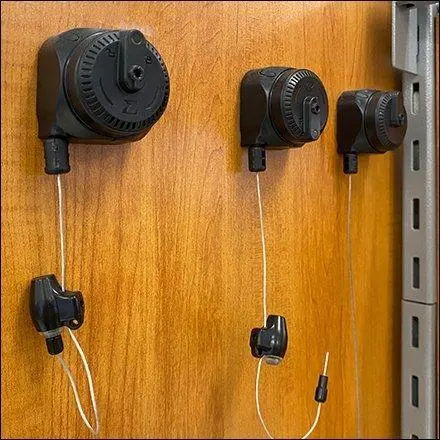
Security tags: Reusable tags are commonly attached to clothing, accessories, and selected retail products.
Security labels: These smaller labels can protect packaged goods and other merchandise where conventional tags may be unsuitable.
Locking display cases: Enclosures help restrict unauthorized handling of expensive electronics, accessories, and other high-value items.
Selecting the right equipment depends on the type of merchandise, store layout, customer traffic, and available budget. Retailers should also train employees to apply, remove, and deactivate tags correctly.
3. Improve Store Layout and Product Visibility
A store’s physical layout can influence its vulnerability to theft. Poor lighting, overcrowded shelves, hidden corners, and tall displays may create areas that employees cannot easily observe.
One practical Shoplifting Prevention measure is to design the store so staff can maintain clear sightlines across important sections.
Consider these improvements:
Keep aisles organized and avoid unnecessarily tall displays.
Improve lighting in corners, entrances, and merchandise areas.
Position frequently targeted products where employees can observe them.
Place mirrors in suitable locations to improve visibility around obstructed corners.
Keep expensive merchandise in monitored areas or secure displays.
Avoid creating isolated spaces that are difficult to supervise.
Convex security mirrors can provide a wider viewing angle in certain locations, helping staff observe areas that are not directly visible from the counter. However, mirrors should complement—not replace—appropriate staffing and camera coverage.
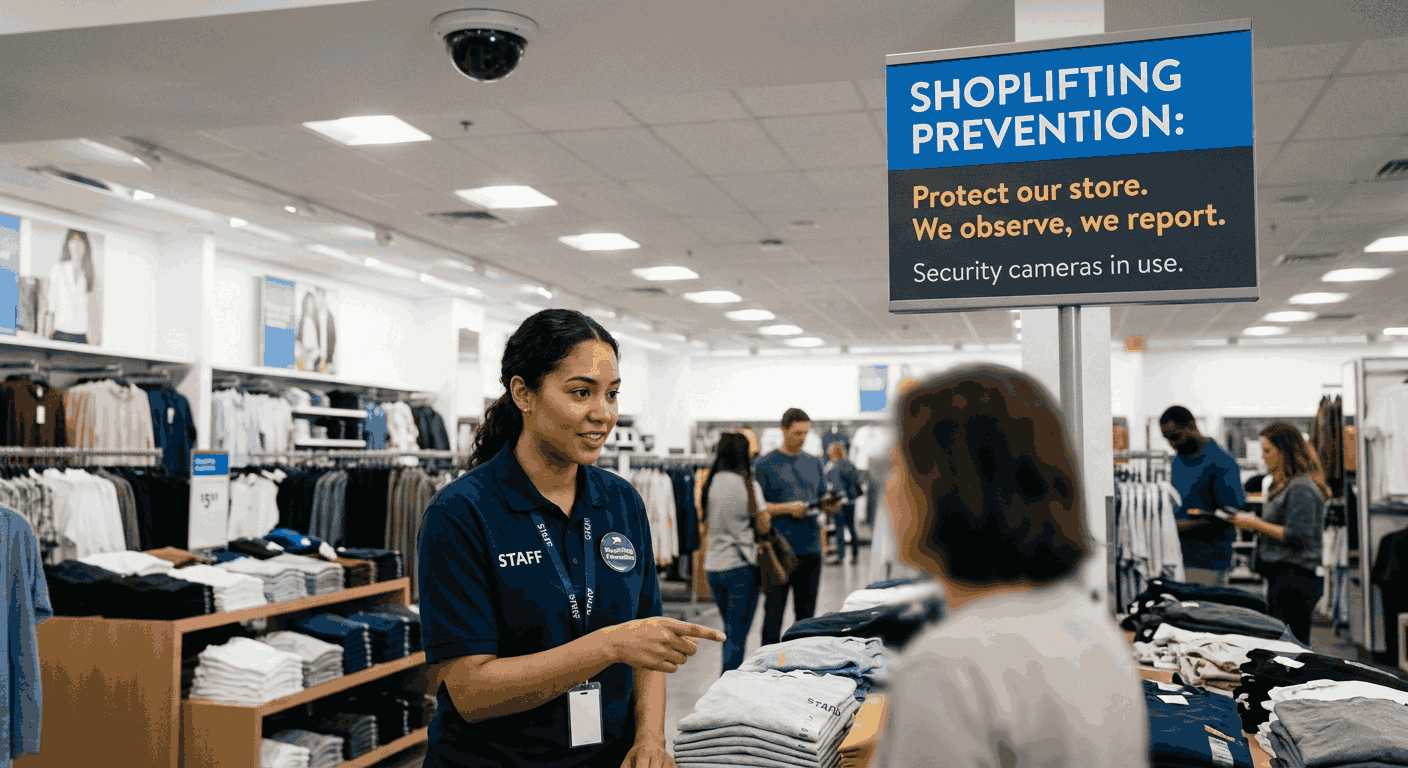
4. Train Employees to Recognize and Respond to Theft
Employees are often the first people to notice unusual activity. However, they need clear guidance on what to observe and how to respond without putting themselves or customers at risk.
Effective Shoplifting Prevention training should focus on awareness, communication, customer service, and established store procedures.
Train staff to:
Greet customers politely when they enter.
Offer assistance throughout the shopping experience.
Remain attentive to merchandise and checkout activity.
Follow procedures for suspicious behavior without making assumptions based on appearance.
Notify a manager or designated security professional when necessary.
Record incidents accurately according to company policy.
Employees should never profile customers based on race, clothing, age, disability, or other personal characteristics. Suspicion should be based on specific, observable behavior and handled consistently.
Most importantly, staff should not physically confront suspected shoplifters unless specifically authorized and appropriately trained under applicable law and company policy. Employee and customer safety must always come first.
5. Monitor Inventory and Identify Loss Patterns
Inventory management plays a major role in identifying potential theft. Without accurate records, retailers may struggle to determine whether missing products resulted from shoplifting, receiving errors, damaged goods, incorrect pricing, or internal process problems.
Regular stock audits help businesses identify discrepancies and investigate their possible causes.
Useful practices include:
Conduct routine physical inventory counts.
Compare sales records with available stock.
Review inventory discrepancies by product and department.
Monitor unusual patterns involving returns, refunds, or voided transactions.
Use inventory management software to track stock movement.
Document incidents and corrective actions.
For example, if a particular product repeatedly goes missing from the same display, the retailer can review its placement, visibility, security tags, and camera coverage.
Using data rather than assumptions allows businesses to improve security measures where they are most needed.
6. Strengthen Checkout and Return Procedures
Checkout areas can experience losses through incorrect scanning, transaction errors, fraudulent returns, and other forms of retail theft. Clear procedures help retailers identify and reduce these risks.
Businesses should ensure that employees scan products accurately, verify transactions, and follow established rules for refunds and exchanges.
Additional measures may include:
Reviewing unusual refund patterns.
Requiring appropriate authorization for high-value refunds.
Maintaining clear records of voided transactions.
Auditing self-checkout activity where applicable.
Training employees to identify procedural errors.
Displaying return policies clearly for customers.
These measures should be applied consistently and respectfully. Retailers should also review legitimate customer complaints and correct checkout problems promptly.
7. Combine Security Measures for Better Results
No single device or procedure can prevent every theft incident. A stronger approach combines multiple security layers that support one another.
For example, a clothing retailer might use security tags on selected garments, cameras near entrances and checkout areas, convex mirrors in obstructed corners, regular stock checks, and employee training.
Together, these measures provide better visibility, help identify inventory discrepancies, and make it easier to investigate incidents.
Retailers should periodically review their Shoplifting Prevention plan as the business grows, merchandise changes, and new risks emerge. Security equipment should be tested, staff training refreshed, and inventory reports reviewed regularly.
Frequently Asked Questions (FAQs)
1. What is the most effective shoplifting prevention method?
The most effective approach combines security cameras, suitable anti-theft devices, organized store layouts, trained employees, and regular inventory checks. The right combination depends on the store’s size, merchandise, and specific security risks.
2. Do security cameras prevent shoplifting?
Visible security cameras may discourage theft and can help retailers review incidents. However, cameras alone cannot guarantee that shoplifting will stop. They work best alongside employee awareness, inventory controls, and other security measures.
3. Which anti-theft devices are best for retail stores?
Electronic article surveillance systems, security tags, security labels, locking display cases, and convex mirrors can all support retail security. The best choice depends on the products being protected, store layout, and budget.
4. How can small businesses reduce shoplifting on a limited budget?
Small retailers can improve lighting, organize shelves, greet customers, conduct regular inventory counts, train employees, and place mirrors in appropriate locations. They can then invest in cameras or anti-theft systems based on identified risks.
Conclusion: Build a Stronger Shoplifting Prevention Strategy
Shoplifting can affect revenue, inventory accuracy, and day-to-day retail operations. However, retailers can reduce their exposure to theft by combining practical security procedures with suitable technology and well-trained employees.
From security cameras and electronic article surveillance to improved store layouts and inventory monitoring, every measure should support a safer and more organized shopping environment.
An effective Shoplifting Prevention plan should be practical, consistent, and tailored to the business. Regular reviews can help retailers identify weaknesses, improve existing procedures, and make informed decisions about future security investments.
Protect Your Retail Store Today
Looking to strengthen your store’s security? Explore retail security solutions, including anti-theft devices, electronic article surveillance systems, security tags, and convex mirrors, to find options suited to your business.