



Retail Theft Prevention Strategies: How to Protect Merchandise Without Driving Customers Away
Retail theft prevention strategies today require solving a difficult balance.
High-value merchandise must be protected from increasingly organized theft, while the in-store experience still needs to feel open, accessible, and worth visiting.
Lock everything up, and customers disengage.
Leave everything open, and shrink begins to erode margin.
That tension defines modern retail.
Gary Huson has seen this shift firsthand. Earlier in his career, merchandising teams prioritized access. Products were meant to be touched, tested, and experienced.
Then theft escalated.
“It takes too many more sales to make up for the loss of a $1,000 handbag,” Gary explains.
That single reality forced a rethinking of in-store security.
The Lock Up Reaction
Across the country, the response has been visible.
Everyday products, from razors to health and beauty items, are now frequently placed behind locked cases.
Gary admits the speed of that shift was surprising. But the underlying challenge remains clear.
When access becomes restricted, friction increases. Customers are required to wait, track down assistance, or change their purchase decision altogether.
Most retailers do not publish data on lost, frustration-driven sales. Still, the behavior is easy to observe. Baskets are abandoned. Shoppers shift online. Some stop coming in altogether.
Retail theft prevention strategies cannot rely solely on locking merchandise behind glass.
Why Layered Protection Works Better
Rather than defaulting to full lockup, many retailers have moved toward layered deterrence.
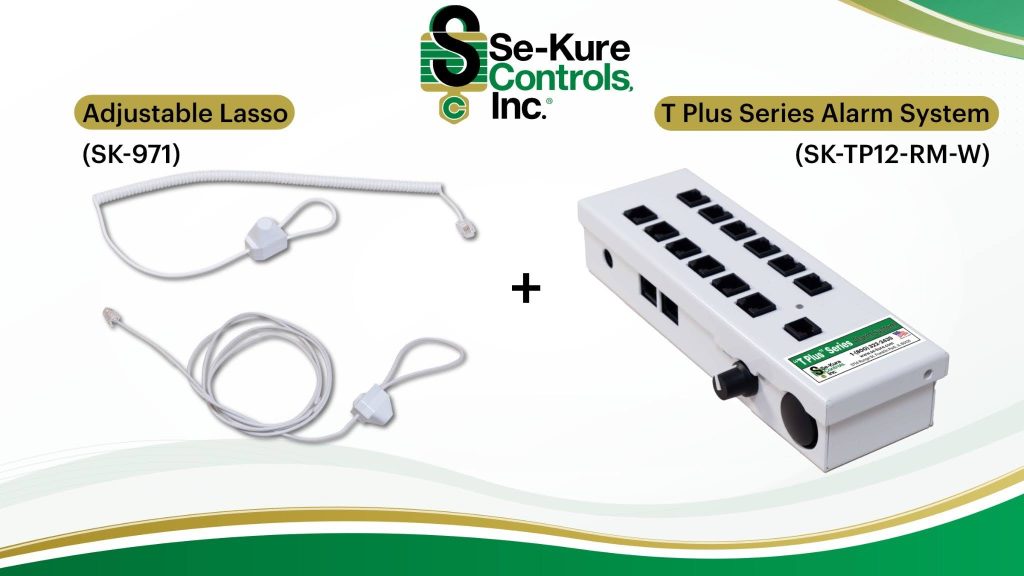
In apparel and accessories, handbags remain a frequent target. Instead of removing access, retailers often tether products using alarming recoilers while still allowing interaction.
Additional layers such as EAS tagging or reinforced cables can be introduced depending on risk.
The goal is not to eliminate access.
The goal is to make removal more difficult.
Retail theft prevention strategies become more effective when they introduce friction for theft without interrupting the shopping experience.
In many cases, small delays make a significant difference.
Organized retail theft often depends on speed. When removal takes longer, large-scale loss becomes harder to execute.
Audio vs Mechanical: What Matters Most
A common question in loss prevention is whether alarms or mechanical systems are more effective.
Gary’s perspective is that each serves a different role.
Audio alarms create immediate awareness. When triggered, they signal that something is happening in real time.
Mechanical systems provide physical resistance. They slow down removal, even when tools are involved.
In practice, the strongest retail theft prevention strategies combine both. Awareness and delay working together.
Relying on only one approach can leave gaps, especially as theft methods continue to evolve.
Different Channels, Different Solutions
Retail environments vary widely, and effective strategies reflect those differences.
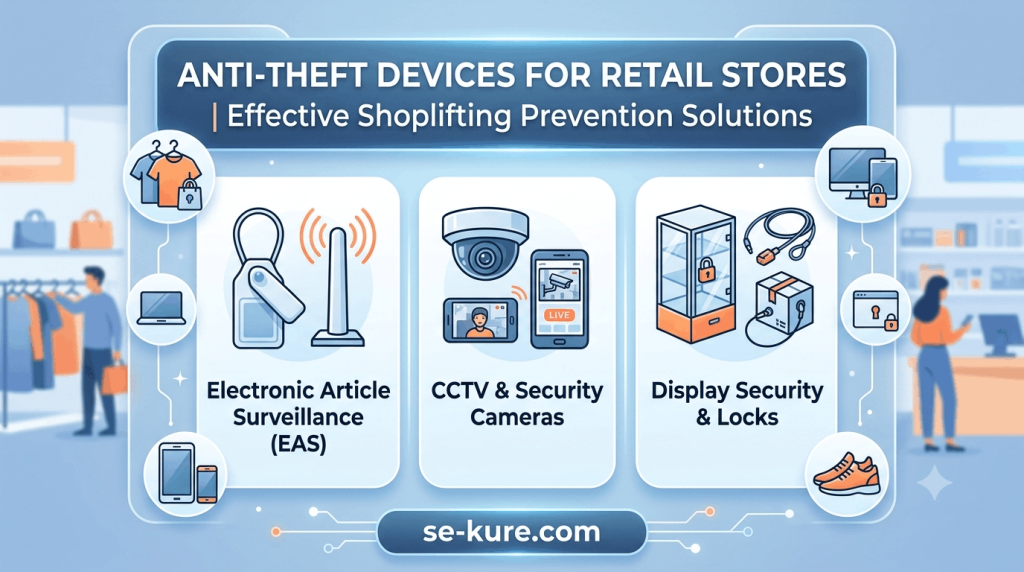
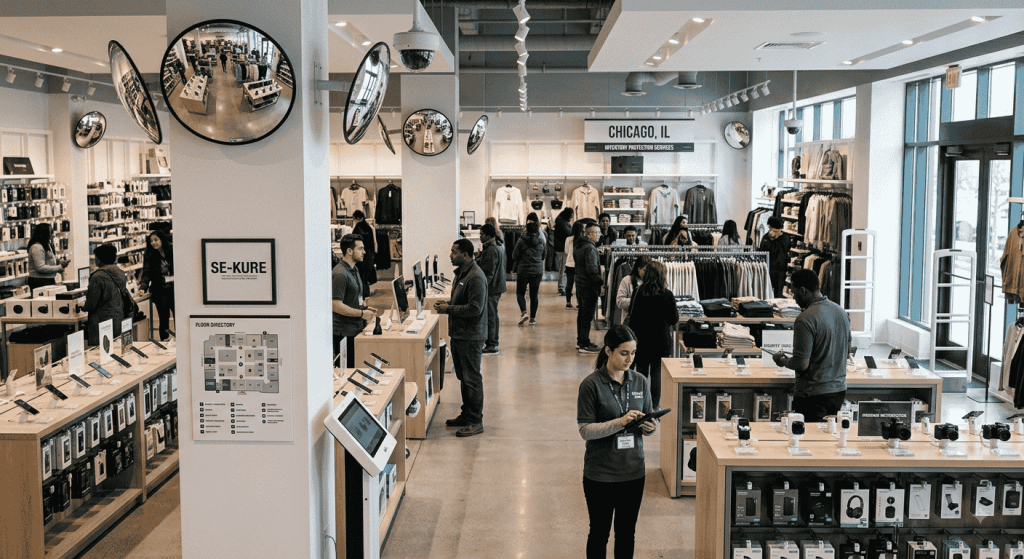
Convenience stores cannot rely heavily on locked cases due to staffing constraints. Visibility tools such as convex mirrors, peg hook locks, and audio annunciators help create awareness without limiting access.
Luxury apparel retailers may layer EAS systems with more advanced display security.
Grocery chains often focus protection on specific high-risk SKUs while maintaining accessibility across most categories.
Retail theft prevention strategies are most effective when they align with the realities of the store. Layout, staffing, and risk exposure all play a role.
There is no single formula that applies everywhere.
Designing Security Without Killing Sales
When evaluating an approach, balance is the defining factor.
Over-securing merchandise can be just as damaging as under-securing it. Too much friction disrupts the shopping experience. Too little invites loss.
The most effective retail theft prevention strategies feel integrated into the store. Security should support the experience, not compete with it.
The objective is not to create a fortress.
It is to introduce friction where it matters most. Protecting margin while still allowing products to be seen, touched, and purchased.
Every locked cabinet may reduce theft. It may also reduce sales.
Retailers that find the right balance protect both.
The Next Step
The next step is to evaluate how merchandise is currently secured across the store and identify where protection is either too restrictive or not effective enough.
Connect with the Se-Kure team to explore the right approach for your stores and begin building a more effective retail theft prevention strategy.
Discover more insights on mirror safety, retail theft prevention, security hardware innovation, and display protection strategies on our blog:
https://se-kure.com/blog/
Stay Connected
Follow Se-Kure Controls for industry updates, product innovations, and expert perspectives: