


Warehouse Blind Spot Safety: How to Prevent the Accident You Never Saw Coming
Warehouse blind spot safety is not something most teams think about every day, until the day something happens.
In a busy facility, forklifts move constantly while pedestrians move between aisles. Pallet racks limit visibility, and production deadlines continue even when intersections become more difficult to navigate safely.
Blind spots do not adjust to operational pressure.
When warehouse blind spot safety is overlooked, the consequences can be life-changing.
The Accident That Changed Everything
Rolly C, who has spent nearly three decades evaluating facilities across the country, shared a story that continues to stand out.
At a 700,000-square-foot distribution center, only one mirror had been installed.
Two forklift operators entered the same aisle from different directions. They saw each other at the last second. One operator was thrown from a stand-up forklift and pinned between the machines.
The result was an amputation.
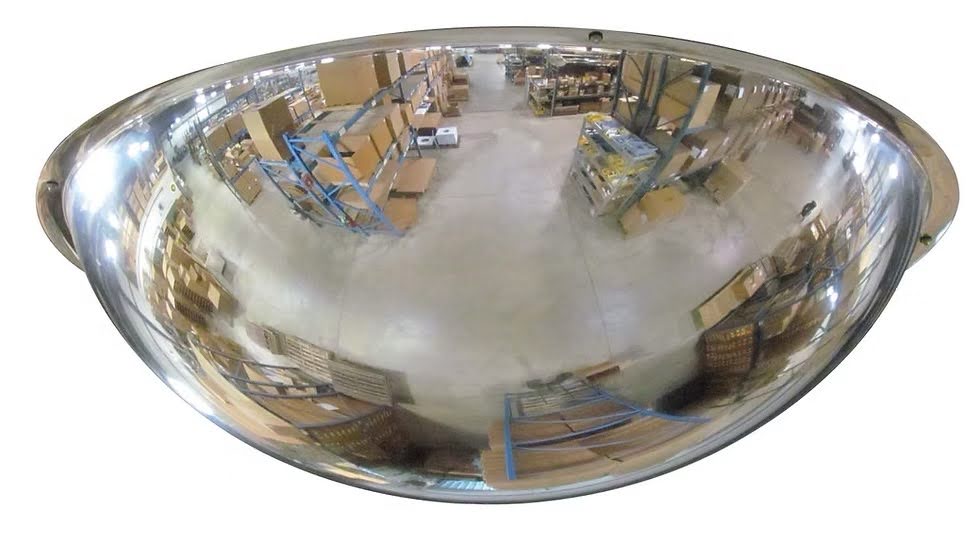
After the accident, the company installed roughly 80 dome mirrors across the facility.
Reactive safety is expensive.
Proactive safety eliminates warehouse blind spots.
The question that often follows an incident like this:
“If somebody gets hurt, why wasn’t protection already in place?”
Why Blind Spots Are More Dangerous Than You Realize
Blind intersections can appear manageable at first. Over time, as traffic increases and workflows evolve, those same intersections become far less predictable.
Risk tends to build in environments where forklift traffic converges with pedestrian movement, where tall racking systems block sightlines, and where narrow corridors or uneven lighting create moments of limited visibility. None of these conditions feel unusual on their own, but together, they create uncertainty.
Facilities can operate for years without incident. That does not always reflect a strong safety strategy. In many cases, it reflects timing.
Safety is not measured by past luck. It is measured by whether risk has been actively reduced.
A pattern Rolly has witnessed firsthand over nearly three decades in the field.
Why Cameras Alone Do Not Solve Blind Spots
Many facilities already rely on camera systems. While helpful, cameras depend on someone actively monitoring them.
“Cameras are great, but somebody has to be watching the monitor.”
— Rolly
Without active attention, cameras tend to serve as tools for reviewing incidents rather than preventing them.
Warehouse blind spot safety depends on immediate visibility and what can be seen in the moment, before a decision is made. Operators need to understand what’s coming into an intersection in real time, not after the fact.
Properly placed safety mirrors provide that clarity and influence behavior instantly.
Simple Visibility Changes Behavior
When visibility improves, behavior follows.
Clear sightlines naturally slow movement. Operators approach intersections with more awareness. Pedestrians become more deliberate when crossing shared pathways. What once felt uncertain becomes easier to read.
That subtle shift, greater awareness in the moment, is what reduces risk.
Warehouse blind spot safety improves not because rules change, but because perception changes.
And perception drives safer decisions.
The Cost of Waiting
Many facilities go years without a serious incident. That history can feel reassuring.
However, many of the organizations Rolly worked with shared that same confidence, until something changed.
Major safety failures rarely come from obvious hazards. More often, they stem from blind spots that were accepted as manageable.
Improving warehouse blind spot safety does not require a full system overhaul. It begins with understanding where visibility breaks down, where traffic overlaps, where sightlines are blocked, and where lighting creates hesitation.
From there, targeted solutions can be introduced to remove uncertainty from those moments.
Warehouse blind spot safety is not about adding more equipment.
It is about restoring control before control is lost.
What Proactive Looks Like
After the amputation described earlier, the retailer did not hesitate.
They told Rolly:
“Whatever he tells you, that’s what you’re buying.”
Every distribution center was brought up to standard. Not because OSHA required it, but because the cost of waiting had already been made clear.
Proactive warehouse blind spot safety reflects a deliberate decision to evaluate blind intersections, correct visibility gaps, and act before traffic patterns create risk.
Complex systems are not always the answer.
Clear sightlines are.
The Next Step
The next step is simple: evaluate where visibility breaks down within the facility and correct it before it becomes a serious incident.
Prevention starts with visibility.
Connect with the Se-Kure team to begin the evaluation process and address blind spots before an incident forces the decision.
Discover More
Discover more insights on retail theft prevention, security hardware innovation, and display protection strategies on our blog:
https://se-kure.com/blog/
Stay Connected
Follow Se-Kure Controls for industry updates, product innovations, and expert perspectives: